 Service
Marble polishing
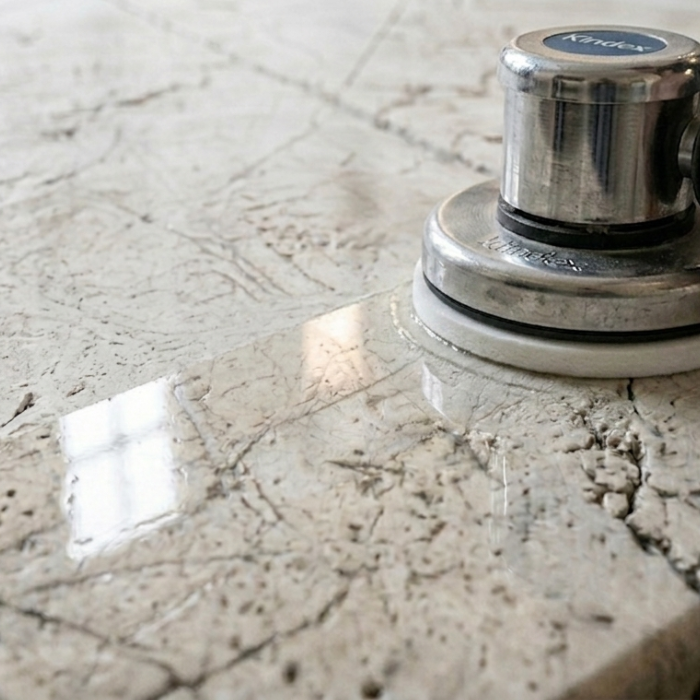
Bringing a deep shine back to a dull floor or worktop, with progressively finer diamond abrasives.
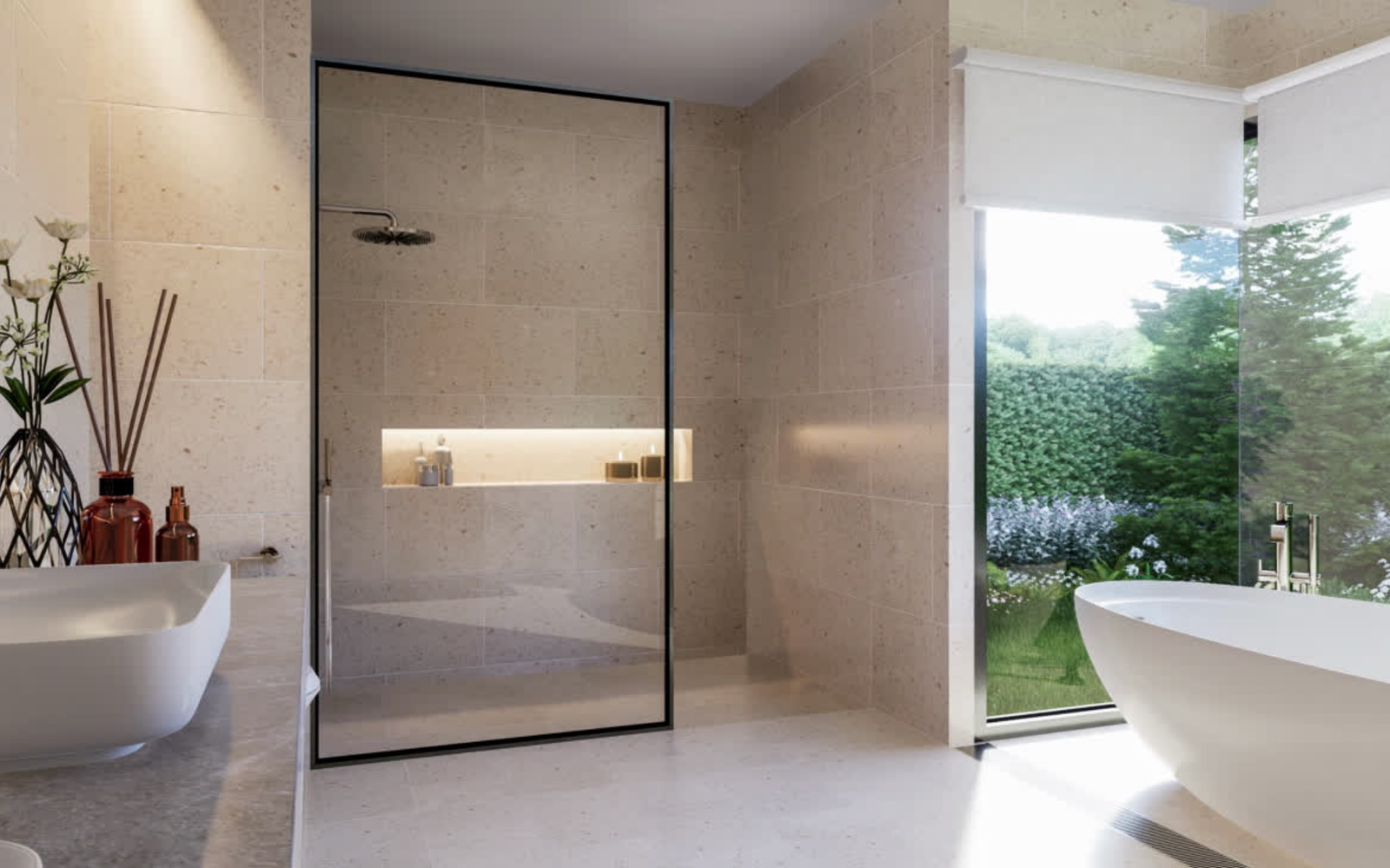
Marble showers, trays, vanity tops and walls: descaling, polishing, joint renewal and water-repellent sealing, with nothing removed.
The bathroom is the room where marble works hardest. Hot water, steam, soaps, shampoos, cosmetics and constant use put daily strain on the surface of a walk-in shower, a solid-stone shower tray, a vanity top or a wall cladding. In Geneva, mains water is fairly hard: after every shower, tiny droplets dry on the stone and leave a whitish deposit which, over the weeks, builds into a dull haze across the marble.
Les Traitements du Sud · Geneva carries out marble bathroom restoration in Geneva and the surrounding communes, from Old Town apartments to lakeside villas in Cologny. Our work is to remove whatever is dulling the stone, close up the fine scratches, restore the original finish — mirror polish, satin or honed — and then protect the surface so that water and limescale no longer penetrate so easily.
We approach every bathroom as a whole. The floor, shower walls, tray, skirting, basin and vanity top are often cut from the same marble, laid at the same time, yet they age differently depending on how much water they see. Our aim is a consistent room, where the eye can no longer tell the shower area from the rest of the stone.
The work is done on site, without removing anything, using machines designed for small surfaces and tight corners. You keep your marble, its veining and its character; only its surface is renewed.
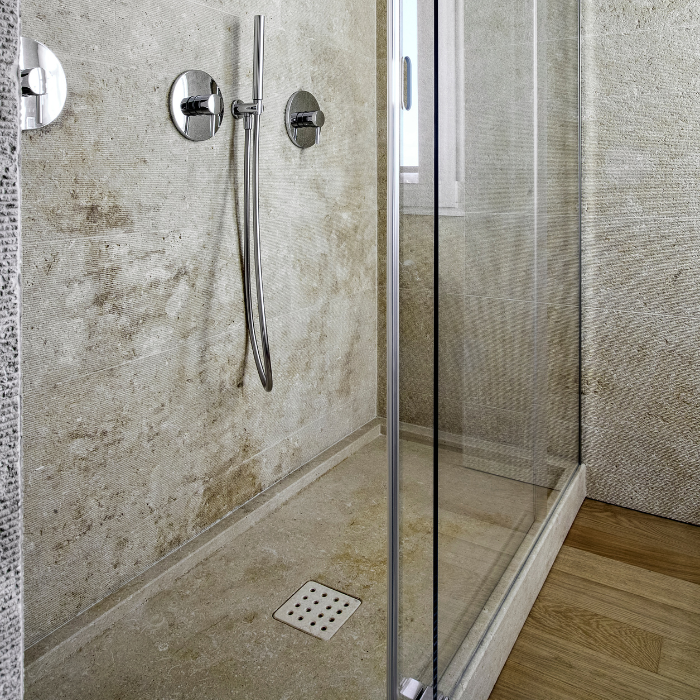
In a shower, marble is soaked several times a day. Limescale settles first on the tray and the lower walls, where water sits before draining away. Shower gels and shampoos leave a greasy film that locks the limescale in place, and many “anti-limescale” household cleaners are acidic: they dissolve the scale, but they also attack the calcium carbonate in the marble. The outcome is familiar — dull rings, a surface that feels rough underfoot and a polish that disappears in patches.
We start with a deep clean using stone-safe products, then rework the surface with light grinding and polishing to remove the etched areas. On a shower tray we make sure the finish suits safety: a honed or satin finish is more comfortable under a wet foot than a mirror polish.
We assess the marble, its original finish, the condition of the joints and the etched areas. You receive a free quote in Swiss francs, itemised by surface: floor, shower, vanity top, walls.
Taps, sanitaryware, furniture and joinery are covered. Drains are sealed off so that polishing slurry does not enter the plumbing.
We remove limescale, soap residue and stains — rust from metal items, colour from cosmetics — using methods that are gentle on the stone.
Diamond abrasives erase scratches and etch marks, then progressively finer grits bring back the chosen finish, from matt to high gloss.
Tired joints are redone, then a water- and oil-repellent impregnator soaks into the stone to slow the absorption of water and products. We leave you with tailored care advice.
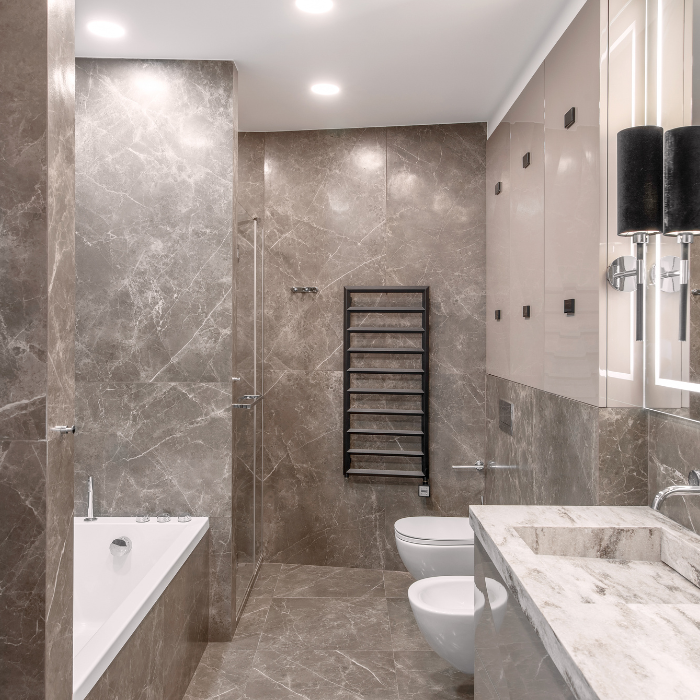
The vanity top takes every everyday knock: toothpaste, mouthwash, perfume, nail varnish, bottles that leave rings, shaving products. Perfumes and lotions often contain alcohol or fruit acids, and they mark a polished surface within seconds. Around the taps, limescale forms a rim that yellows over time.
When the top and basin are not cut from the same block, we treat them separately, using hand tools for the curves and the bowl. Chips on an edge or a corner are filled with a resin tinted to match, then re-polished so the stone reads as one continuous piece again; this is the heart of our marble repair service in Geneva.
Before choosing a method, we identify the cause of each defect. Three kinds of damage turn up in almost every marble bathroom we restore around Lake Geneva.
It sits on the surface and leaves the stone grey and lifeless. As long as it has not been treated with an acidic product, it comes off without harming the marble. Once it has been scrubbed with vinegar or descaler, it leaves matt patches that need re-polishing.
Bath oils, hair dyes, rust from a metal pot or a fixing screw: these stains soak into the pores. They are treated with a poultice, an absorbent paste that draws the stain up to the surface as it dries. See our marble stain removal page.
Blackened or eroded joints let water seep under the slabs and darken their edges. We redo them in a shade matched to the marble, which instantly sharpens the whole composition.
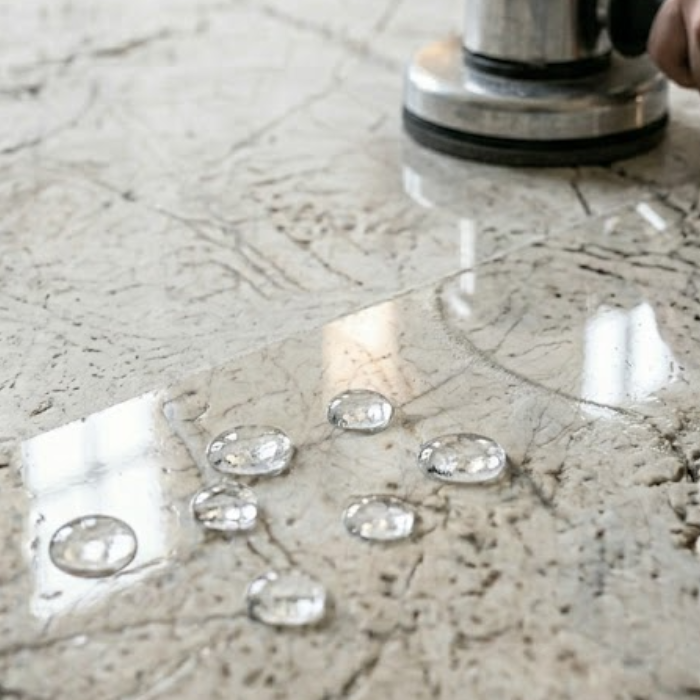
Polished marble left unprotected soon takes up water and deposits again. We apply a water- and oil-repellent impregnator that penetrates the pores without forming a plastic film on top: the stone keeps its natural feel and continues to breathe, but water beads instead of soaking in, and limescale clings less.
This protection does not make marble indestructible — no honest product claims that — but it gives you time to wipe away a splash and makes cleaning far easier. It is renewed according to use. The details of this step are set out on our marble sealing and protection page.
Marble walls in a bathroom age differently from the floor. They are not scratched by footsteps, but running water traces vertical streaks, steam dulls the upper areas and splashes of product gather around niches and shelves. The work is done vertically, with lightweight machines and soft pads that follow the surface without leaving overlap marks.
In the older buildings of the nineteenth-century ring boulevards as well as in more recent apartments in Champel or Eaux-Vives, wall cladding is often made of thin slabs. We adjust the pressure and abrasive grits to respect their thickness. Where the room has a marble-clad bath, the panel and rim receive the same care as everything else, so the room reads as a single whole once again.
For a PPE (condominium) or a property managed by a régie, we can organise the work in coordination with the management and the occupants, with a clear schedule. Our usual partners are presented on the property managers in Geneva page, and interior designers will find how we work together on the interior designers page.
The most effective care is also the simplest: run a squeegee or a microfibre cloth over the walls and tray after every shower. Stone that has been wiped dry gives limescale no time to set. For weekly cleaning, a pH-neutral soap diluted in warm water is all you need. Descalers, vinegar, lemon and abrasive creams are best avoided altogether: they are the most common reason a polish disappears.
On the vanity top, a small tray beneath perfume and lotion bottles prevents rings. Bath mats should be dried regularly so they do not hold moisture against the floor. If a stain appears despite everything, it is better to ask us before trying a strong product. Our marble maintenance service in Geneva also lets you schedule a periodic refresh, particularly for second homes and rented apartments.
ServiceBringing a deep shine back to a dull floor or worktop, with progressively finer diamond abrasives.
 Service
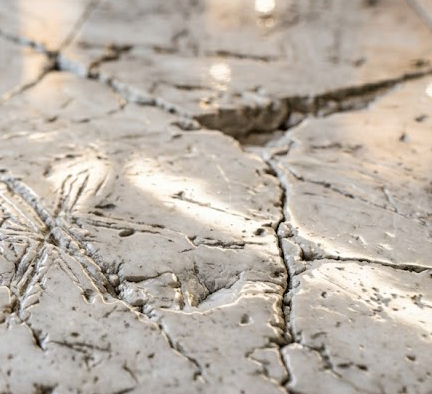
Chips, cracks, broken corners: filled with tinted resin and re-polished for a discreet repair.
 Surface
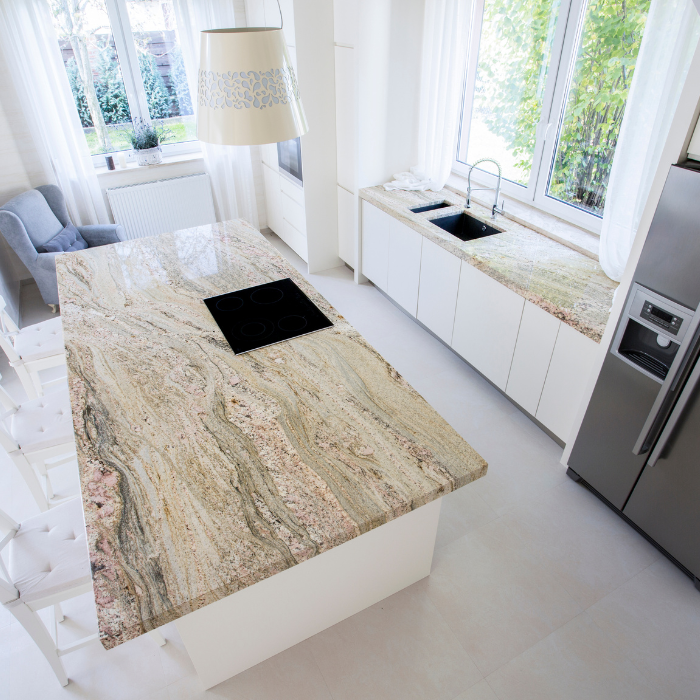
Kitchens, splashbacks and islands: closely related expertise, applied to acid etching and grease stains.
No. Restoration is carried out directly on the stone in place. We protect the taps, sanitaryware and furniture, then work the marble by machine and by hand in the corners. Removal is only justified if a slab is broken into several pieces or has come loose, and in that case we state it clearly in the free quote.
For an apartment bathroom, the work generally takes one to two days depending on the surface area and the condition of the stone. The water-repellent sealer then needs time to cure before the shower is used normally again. We give you a precise schedule with the quote so you can plan ahead, especially if you have only one bathroom.
Limescale itself is mainly a surface deposit that dulls the appearance. It is usually the products used to remove it, often acidic, that attack the marble and wipe out its polish. Drying the stone after showering, using a pH-neutral soap and applying a water-repellent sealer greatly reduce the problem day to day.
Mirror-polished marble does become more slippery when wet. For a shower tray or a walk-in shower floor, we recommend a honed or satin finish, which keeps the beauty of the stone while offering better grip. The walls and vanity top can keep a high polish for an attractive contrast.
Yes. Blackened, cracked or eroded joints let water through and darken the edges of the slabs. We remove them, clean out the gaps and lay a new joint in a shade matched to the marble. This step is part of the restoration and comes before the water-repellent sealing, which then covers the whole surface.
Yes, regularly. We coordinate with the régie or the PPE administrator over access, working hours and informing neighbours, and the free quote in Swiss francs can be sent directly to the management. The work takes place inside the apartment, with machines fitted with dust extraction to keep disruption to a minimum.
From the right bank to Champel, from Carouge to Collonge-Bellerive, and on to Coppet and Nyon in the canton of Vaud.
Tell us about your shower, vanity top or walls, and attach a few photos if you like: we will reply with a free quote in Swiss francs. You can also use our contact page.