 Tailored finish
Marble polishing
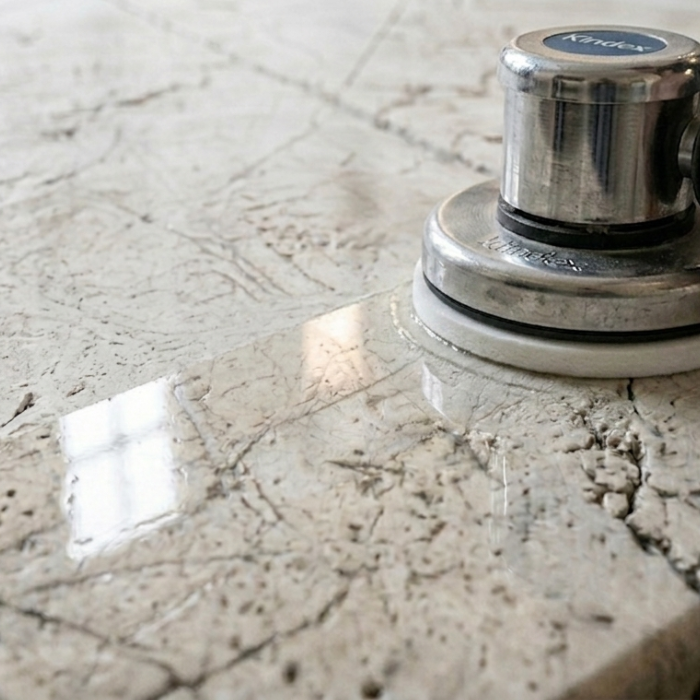
From matt to mirror, polishing prepares an even surface before crystallization.
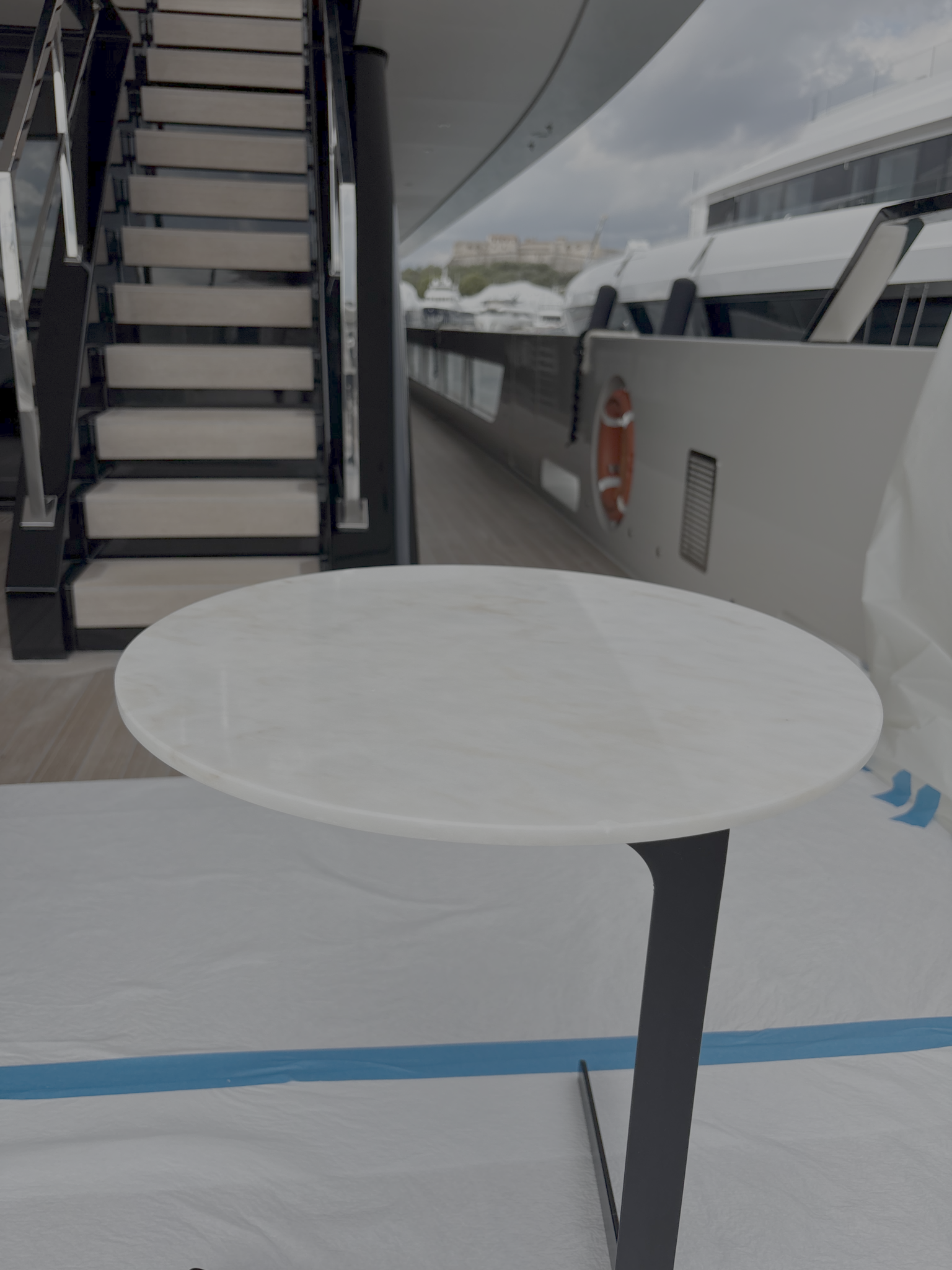
A treatment that hardens and brightens the surface of calcareous marble, ideal for lobbies, reception areas and busy floors.
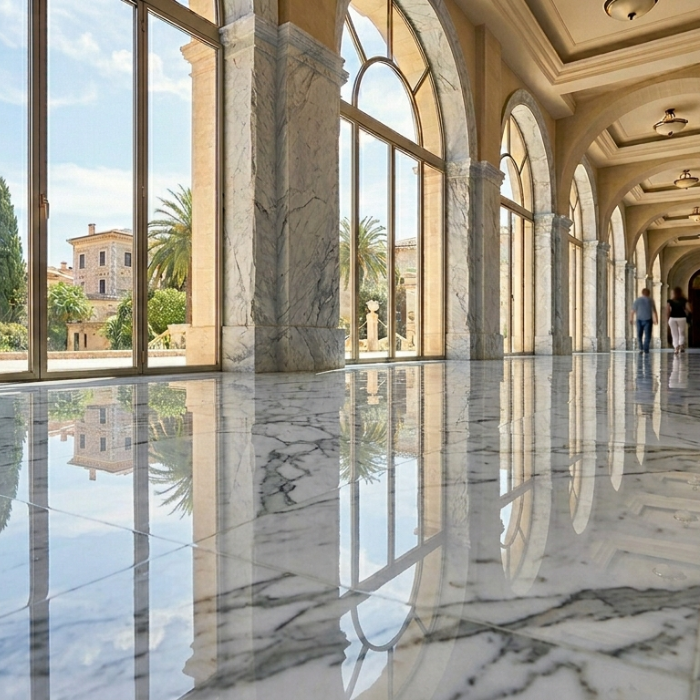
Marble crystallization in Geneva is a surface treatment that transforms the top layer of the stone to make it harder, glossier and easier to care for. It is aimed first and foremost at heavily used floors: building entrance halls, reception areas, hotel corridors, offices and shops where marble needs to keep its lustre despite constant foot traffic.
Unlike a wax or varnish laid on top of the stone, crystallization works within the first few microns of the marble. The shine it produces is part of the material: it does not flake, does not yellow and lets the stone breathe. That is why it has long been a favoured technique for looking after large marble floors.
Les Traitements du Sud · Geneva carries out crystallization for property managers and PPE condominiums, hotels, offices, boutiques and private owners across the canton of Geneva and the Vaud lakeshore. We first assess whether your stone is suitable, then choose the product and dosage that match its condition.
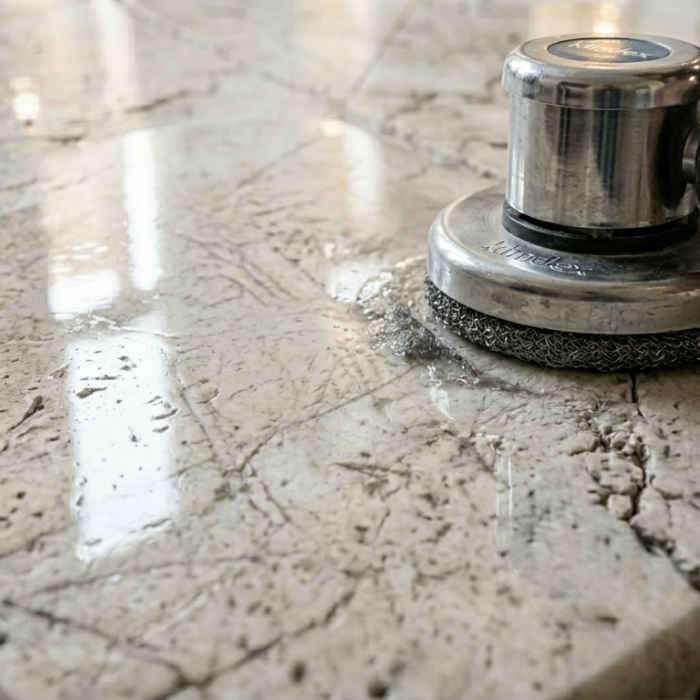
Marble is a metamorphic rock made up mainly of calcium carbonate. Crystallization makes use of precisely this composition. The product, applied as a fine spray, generally contains fluorosilicates. Worked in with a rotary machine fitted with a steel-wool pad, the friction and heat trigger a reaction with the calcium carbonate at the surface.
This reaction forms new crystals, harder and more compact than the original calcite, which blend into the surface. The result is a very thin layer with better resistance to abrasion, which reflects light evenly and partly closes the surface porosity.
Because the reaction needs calcium carbonate, crystallization is intended for marbles and polishable limestones. For siliceous stones such as granite, other finishes are preferable, and we will point you towards polishing or a suitable sealer.
Crystallization performs at its best in clearly identified situations.
PPE entrance halls, landings, hotel lobbies and corridors: the crystallized layer stands up better to shoes and castors, and the shine lasts longer between visits.
On marble in good condition whose gloss has simply dulled, crystallization restores brilliance quickly, without needing to go back through the full grinding sequence.
In spaces open to the public, regular crystallization keeps a floor immaculate all year round, as part of a maintenance plan.
The two are often confused, since both aim for glossy marble. Yet they work in very different ways.
Polishing is mechanical: ever-finer diamond abrasives refine the stone up to the chosen finish, from matt to mirror. It lets you choose the exact look and applies to every marble. It is also what removes micro-scratches and light wear marks.
Crystallization is both chemical and mechanical: it transforms the surface layer to harden it and make it shine. It does not correct uneven tiles or deep scratches, but it strengthens how well the shine holds up on a heavily used floor.
In practice, the two combine very well. On a worn floor, we start with grinding to flatten the surface, continue with polishing to restore an even appearance, then crystallize to give the shine its resilience. On a sound floor that has simply dulled, crystallization alone may be enough. During the visit, we tell you which combination is right for your surface.
We identify the stone, check that it is calcareous and assess its condition. You receive a free quote in Swiss francs with the recommended combination of treatments.
A deep clean removes waxes, cleaning-product residue and ingrained dirt, so that the product acts directly on the stone.
If the surface shows scratches or uneven tiles, grinding and polishing beforehand prepare an even base.
Skirting, woodwork, doors and metal fittings are protected, as the crystallization product should touch only the stone.
The product is finely sprayed and worked in with a rotary machine and steel-wool pad, area by area, until an even shine is achieved.
We buff the whole floor, check the reflection and hand over the care routine that makes the result last.
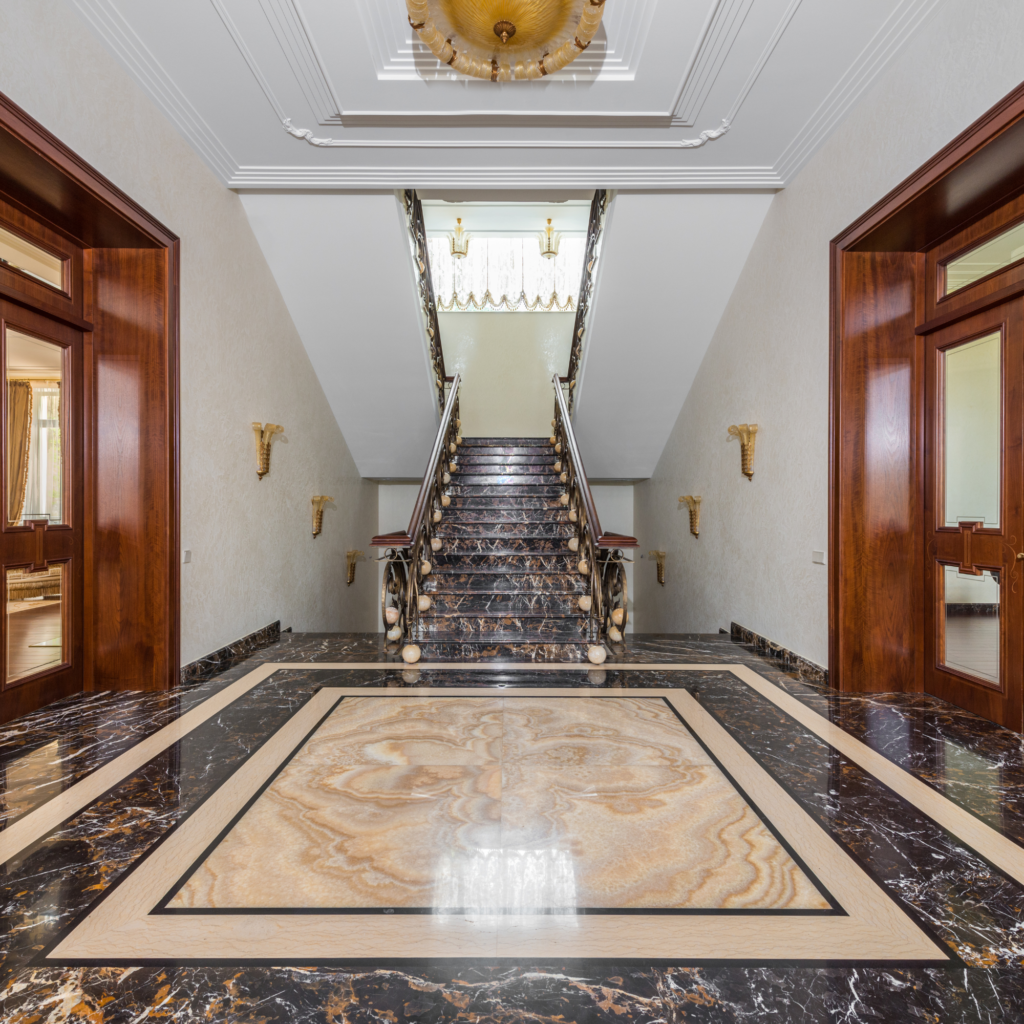
Every winter, Geneva entrance halls receive grit and de-icing salt carried in from the street, on top of the daily comings and goings of residents, couriers and pushchairs. This is exactly where crystallization brings a visible benefit: the hardened surface keeps its lustre longer and is easier to clean.
For property managers and PPE buildings, we work on one half of the hall at a time or outside busy hours, so that access to the apartments is maintained. Our page on marble entrance lobbies explains this organisation in detail, and the one for property managers describes how we work with building managers.
Crystallized marble lends itself to simple, quick care. A few good habits are all it takes to enjoy its shine for a long time.
How often maintenance crystallization is needed depends on the space: a busy entrance hall benefits from more frequent visits than a private living room. We suggest a realistic schedule after observing how the floor is actually used, and we can build it into a scheduled care plan.
 Tailored finish
From matt to mirror, polishing prepares an even surface before crystallization.
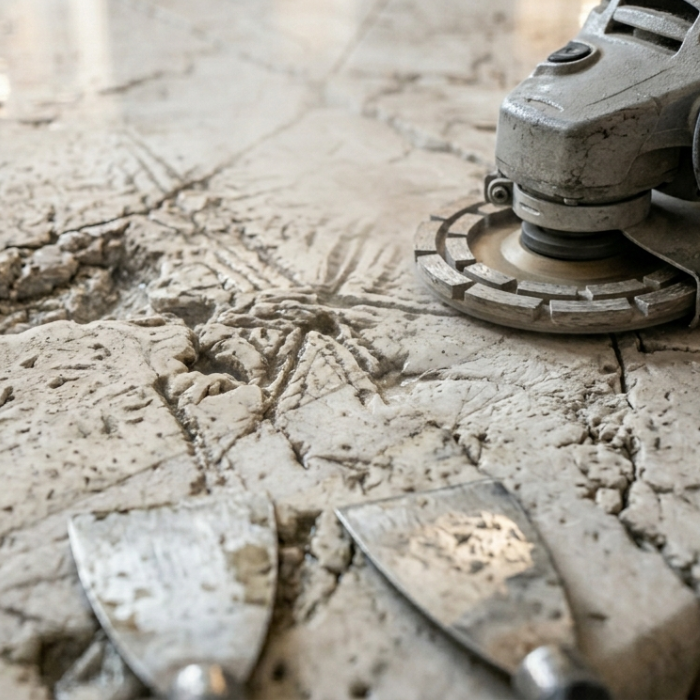 Levelling
To remove deep scratches and lipping between tiles before bringing back the shine.
 Regular care
Scheduled upkeep to keep a crystallized floor gleaming throughout the year.
It is intended for marbles and calcareous stones, as it relies on a reaction with calcium carbonate. The vast majority of interior marbles respond very well. During the visit, we identify your stone and, if it is siliceous like granite, we suggest polishing or a sealer that suits it better.
No, it is a treatment that transforms the surface layer of the stone itself. The resulting shine is part of the marble: it forms no film, does not flake and does not yellow over time. The stone keeps its natural look and breathability, with a harder, brighter surface.
It depends directly on foot traffic and care. In a private living room, the shine lasts a long time; in a busy entrance hall, regular maintenance crystallizations keep the lustre. We suggest a schedule suited to your space after observing how it is actually used.
Yes, the floor can be used soon after finishing and surface drying. In a PPE entrance hall, we work section by section so that people can pass throughout the work. We let you know when furniture can go back and when the first wash can be done.
Only if the surface shows marked scratches, uneven tiles or deep wear. In that case, grinding then polishing prepare an even base, and crystallization then strengthens the shine. On sound marble that has simply dulled, crystallization can be carried out directly after a thorough clean.
Sweep or use a soft-brush vacuum, then wash with lukewarm water and a pH-neutral soap designed for natural stone. Drying limescale water marks gives a crisper reflection. Entrance mats hold back salt and grit in winter. These simple habits significantly extend the effect of the treatment.
Left bank, right bank, lakeside communes and the Vaud shore as far as Nyon.
Tell us the area, the location and the condition of your floor: we will reply with a clear proposal in Swiss francs. You can also write to us from our contact page.