
 Service
Marble polishing
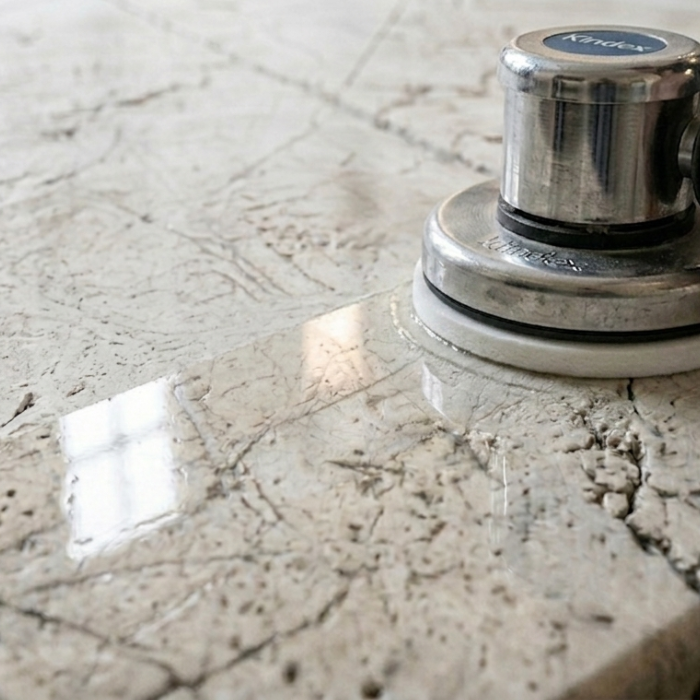
The finish that gives the floor its shine and depth, set anywhere from matt to mirror to suit the room.

Apartments, villas and large reception rooms: slabs levelled, joints renewed and the finish of your choice, for a floor that flows as one again.
A marble floor reads as one continuous surface: light travels from slab to slab, the veining flows across the room and the whole floor gives the space its depth. Over the years, footfall, fine grit and Geneva’s fairly hard water dull that continuity. Walkways turn pale, joints sink, a few slabs end up slightly proud of their neighbours. Marble floor restoration in Geneva is about recovering a flat, even and luminous surface, without replacing a single slab unless it is genuinely needed.
Les Traitements du Sud · Geneva restores marble floors in apartments, villas and large reception rooms across the canton. A living room in a building on the nineteenth-century ring boulevards, a suite of drawing rooms in Champel, the ground floor of a villa in Cologny or a reception room in Vandœuvres each call for a different reading: the type of stone, the size of the slabs, the condition of the joints and the level of shine you are after.
We work at the scale of the whole room. The aim is a floor you take in at a glance, where the old walkways and successive patch repairs simply disappear. Every project begins with a visit and a free quotation in Swiss francs, drawn up after looking at the floor, the light in the room and the way you use it.
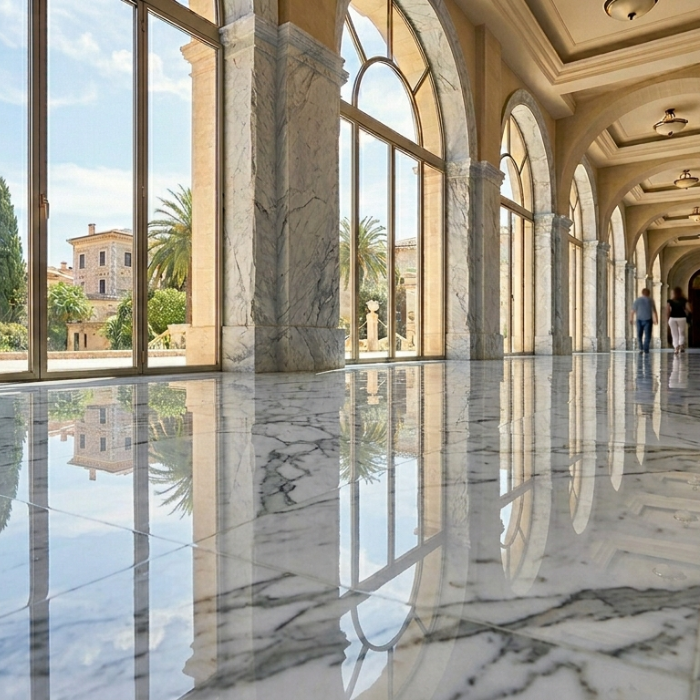
In apartments, marble often runs through the entrance hall, corridor and living room in one sweep. Slabs are frequently mid-sized, laid square or on the diagonal, sometimes framed by a border. We work room by room, protecting the adjoining parquet and skirting boards, and paying particular attention to noise and to the building’s common areas.
In villas, surfaces are larger and the marbles more varied: a veined white in the living room, a darker stone in the hall, an indoor terrace edge that catches the sun. The challenge is a consistent finish from one room to the next, even though each marble responds differently to grinding and polishing.
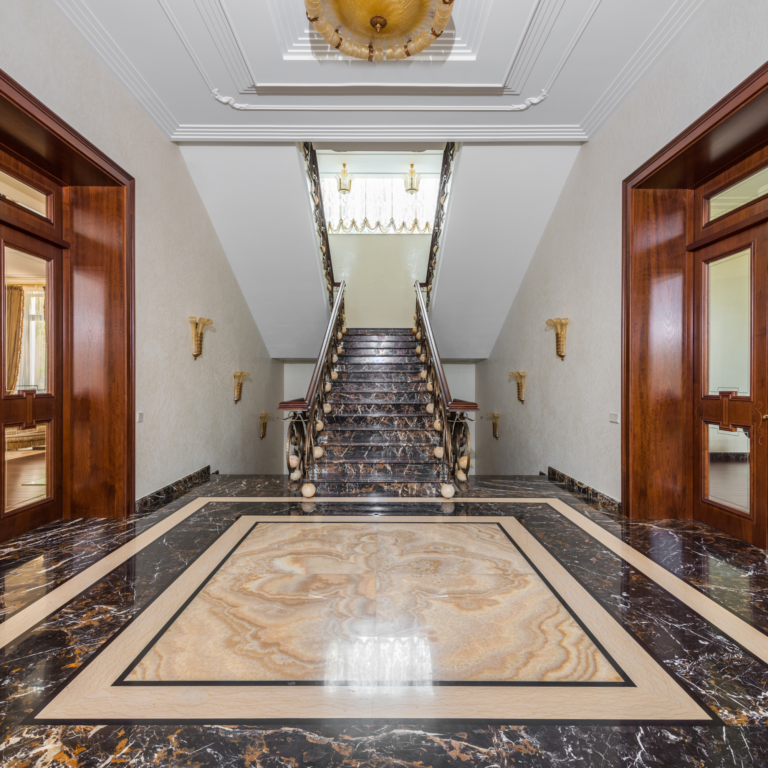
In large reception rooms, drawing rooms or spaces where you entertain, flatness and the way the floor reflects light come first. A slight lip between two slabs shows immediately under a chandelier. We treat these surfaces to achieve an even mirror finish along the full length of the room.
Each stage answers something observed during the visit. On a lightly marked floor some stages are shortened; on a tired floor, grinding takes a larger share of the work.
We identify the marble, measure any lipping, and look at the joints, stains and walkways. The free quotation sets out the stages chosen and the finish we are aiming for.
We move the furniture out of the area being treated, protect skirting, doors, joinery and wall bases, and screen off adjoining rooms to contain the working water.
Wet marble grinding through successive grits removes scratches and brings all the slabs back onto one plane. This is the stage that makes walkways vanish.
Sunken joints are refilled in a shade matched to the stone; chips and fine cracks are filled with tinted resin using our marble repair method.
Polishing closes the surface up to the chosen level of shine, then an oil- and water-repellent sealer limits stain penetration. The furniture goes back in place.
A slab that sits proud catches both light and dirt. Flat grinding brings every edge back level with its neighbours. Where a slab is cracked or sounds hollow, we assess it with you: consolidation, repair with tinted resin or, if you have spare slabs, a one-off replacement before the whole floor is refinished.
Joints are often the first thing to age: they sink, darken or crack. A careful regrout, in a colour chosen on site to blend with the background of the stone, changes how the floor reads as much as polishing does. Flush joints also make day-to-day cleaning easier.
High-gloss mirror for a reception room, satin for a living space, honed matt for a busy entrance hall: the finish depends on the use of the room and the marble. We carry out a test on a discreet area so you can judge the result in the room’s real light before giving the go-ahead.
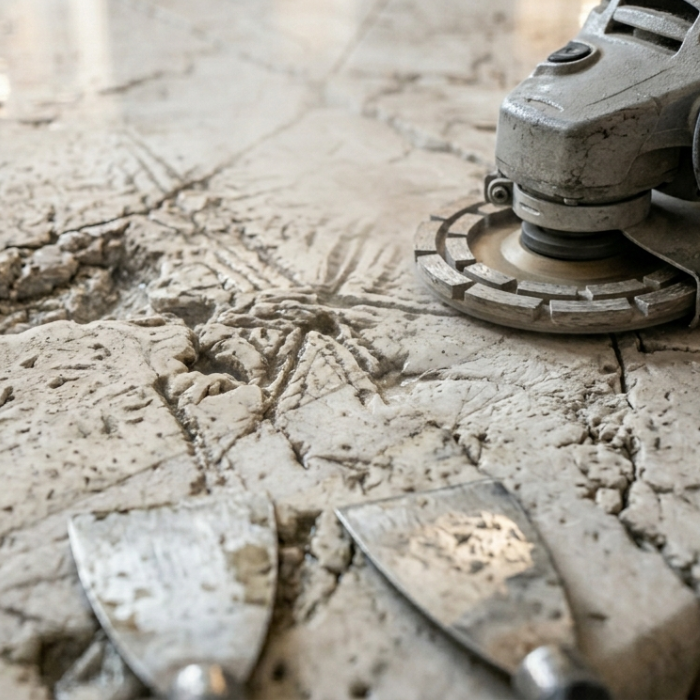
Restoring a floor starts with clearing it. Our team moves everyday furniture, gathers it in a room that is already finished or in a protected area, then puts it back once the finish has dried. For valuable pieces — pianos, antique furniture, fine rugs, artworks standing on the floor — we agree the best approach together: moved by us with suitable protection, or handled beforehand by a specialist mover of your choice.
In a large villa we work zone by zone so the house stays liveable: bedrooms first, then the living areas, or the other way round to suit your diary. In apartments we plan our route through the common parts, protect the lift and keep to working hours that comply with the building’s rules.
Grinding water is vacuumed up as we go. Rooms are handed back clean, dry and usable; you usually only need to wait a few hours before walking on the floor, and a little longer before putting rugs back down.
Marble is a calcareous stone: it reacts to the mild acids of everyday life — citrus juice, wine, vinegar, some household cleaners — which leave dull rings. Geneva’s fairly hard water also leaves a faint haze around areas that are mopped often. In winter, de-icing salt and grit carried in on shoes act like a fine abrasive in entrance halls and corridors.
A full restoration resets the clock, but it is maintenance that decides how long the result lasts. Generous doormats at the entrance, a pH-neutral cleaner, felt pads under furniture and wiping up acidic spills quickly are enough to keep a floor shining for a long time. For large surfaces or busy spaces, periodic marble maintenance — a light buff and a check of the sealer — extends the finish without going back to grinding.
Where the floor shows only a dull haze with no deep scratches, marble crystallisation may be enough to revive the shine. Ingrained stains — oil, rust, ink — call for poultice-based stain removal before any refinishing.
Carrara, Calacatta, Bardiglio, Emperador, green or black marbles: each stone has its own hardness, sensitivity to staining and way of taking a polish. The choice of abrasives and the level of shine depend directly on it.






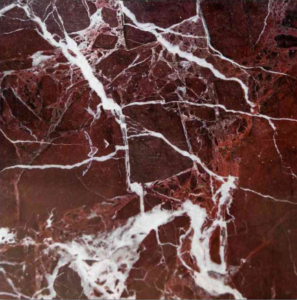
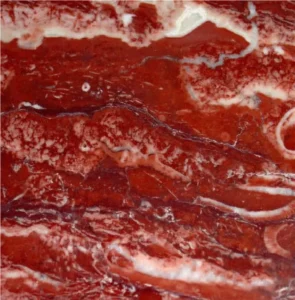
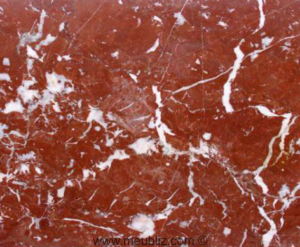
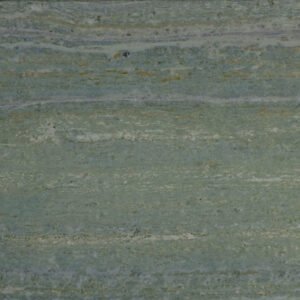


The quotation lists every operation planned, so you know exactly what will be done in each room.
A marble floor often sits alongside other stone features in the home or building.
ServiceThe finish that gives the floor its shine and depth, set anywhere from matt to mirror to suit the room.
 Surface
For common-area floors, zone-by-zone work that keeps access open for residents.
 Clients
Technical support for full renovation projects in apartments and villas.
For an average apartment living room, allow one to three days depending on the condition of the slabs, the number of grinding grits required and the regrouting. A large reception room in a villa takes longer. The exact duration is set out in the free quotation, after we have visited and looked at the floor on site.
No. Our team moves everyday furniture and puts it back at the end. We simply ask you to put away small fragile items and let us know about any valuable pieces. For a piano or a heavy artwork, we agree the best solution together, possibly involving a specialist mover of your choice.
Yes, in the vast majority of cases. We work room by room and protect the adjoining areas; grinding is done wet, which keeps dust to a minimum. You only need to avoid walking on the area being finished. We plan the order of the rooms with you so the home stays fully functional throughout.
Yes, that is exactly what flat grinding is for: diamond abrasives bring the raised edges down level with the neighbouring slabs. A slab that sounds hollow or moves is examined separately; depending on the case, it is consolidated or repaired before the whole floor is refinished to an even surface.
An entrance hall takes in sand, grit and, in winter, de-icing salt. A satin or honed finish keeps an even look for longer and makes micro-scratches less visible than a mirror gloss. In a reception room, by contrast, gloss brings out the veining beautifully. A test patch on site helps you decide with confidence.
Regular sweeping or vacuuming, washing with a pH-neutral cleaner and little water, felt pads under furniture and quickly wiping up acidic spills are enough. Avoid vinegar, bleach and limescale removers. At the end of the project we give you care advice tailored to your particular marble.
Old Town, Eaux-Vives, Champel, the right bank, the lakeside communes on the left bank and on to Coppet and Nyon: we restore marble floors throughout the canton of Geneva and part of the canton of Vaud. Co-owners in a PPE can also see our page for property managers and PPEs, and anyone can reach us through the contact page.
Tell us about the room, its approximate size and send a few photos of the floor: we will arrange a visit and provide a free quotation in Swiss francs.