
 Levelling
Marble grinding
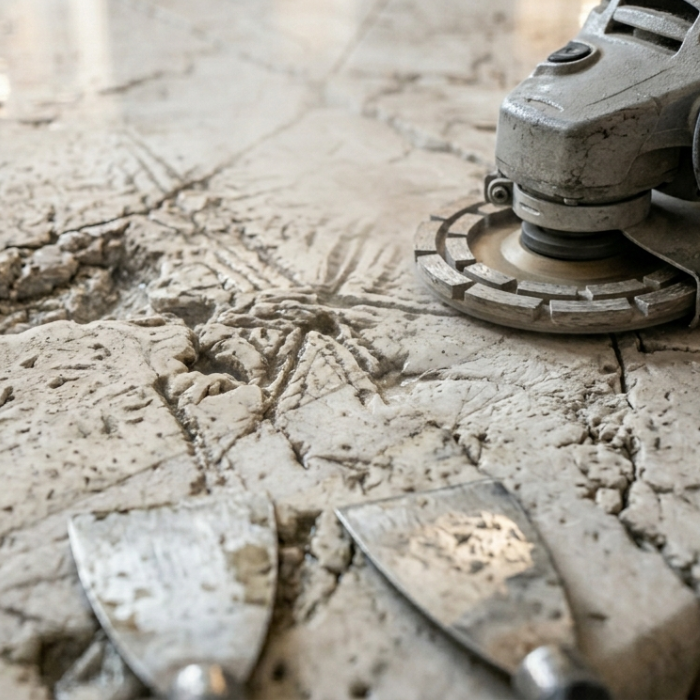
When tiles are uneven or scratches run deep, grinding flattens the surface before polishing.
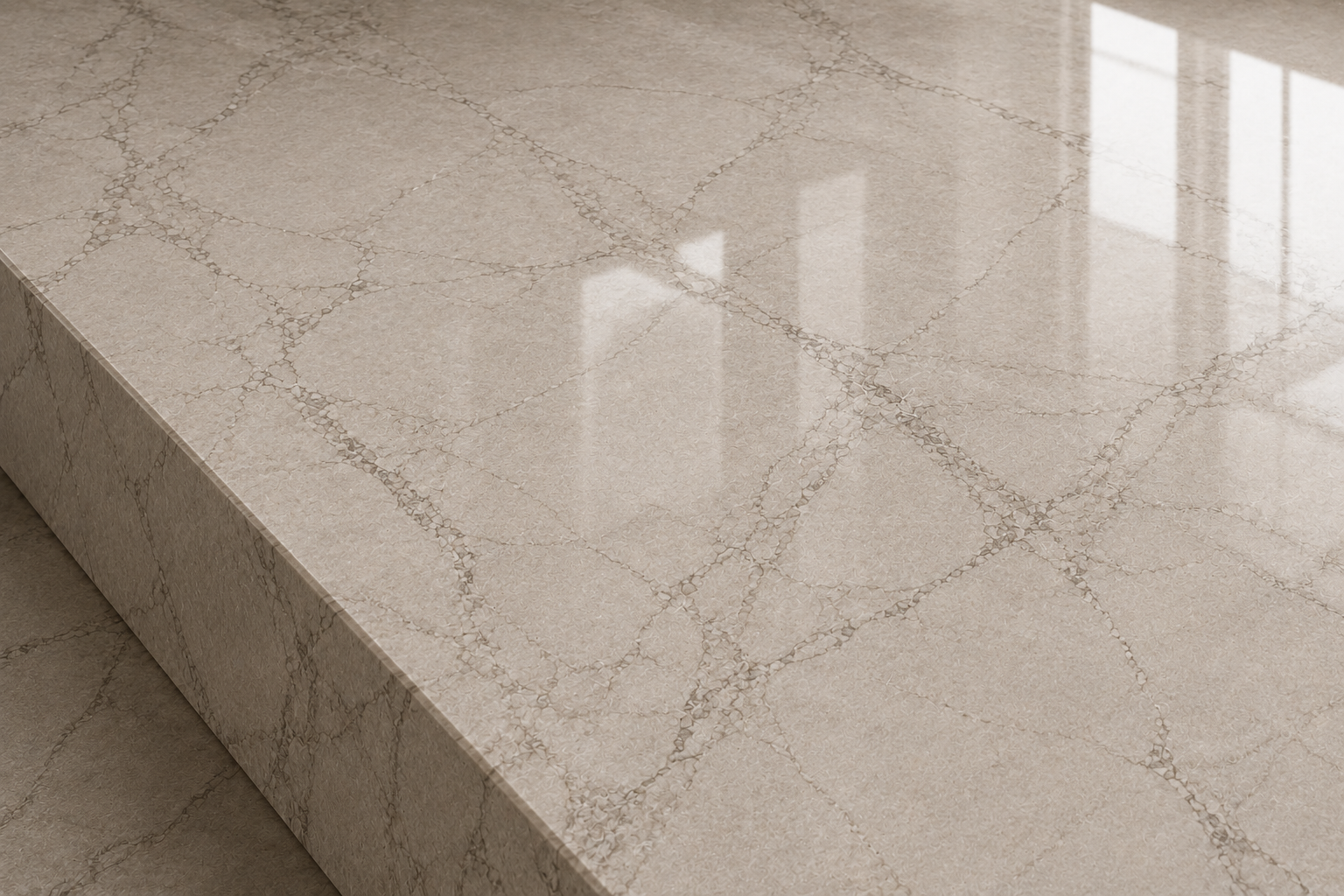
Matt, satin, gloss or mirror: we polish your marble wet, grit after grit, to the finish that suits the way you use it.
Marble polishing in Geneva means refining the surface of the stone step by step until it reaches exactly the look you want: a deep, velvety matt, a subtle satin, a luminous gloss or a mirror polish that reflects the lighting of an entrance hall. It is not a product applied on top; it is mechanical work carried out on the stone itself, grit after grit, revealing the original colour and veining of the material.
In Geneva, marble graces the entrance halls of buildings along the nineteenth-century ring boulevards, apartments in Champel, villas on the Cologny hillside and boutiques on the rue du Rhône. Each setting calls for a different finish: a busy entrance floor is not treated like a bathroom vanity top or a fireplace mantel. Our role is to choose with you the level of finish that will stay beautiful for a long time in the way you actually use the space.
Les Traitements du Sud · Geneva works for private owners, property managers and PPE condominium owners, hotels, offices and shops across the canton of Geneva and the Vaud lakeshore. We polish wet, with suitable machines and diamond abrasives, which allows us to work cleanly in a lived-in home or a space that stays open to the public.
Polishing is often part of a wider restoration: it follows marble grinding when the surface needs levelling, and it comes before a water- and oil-repellent sealer that protects the result day to day.
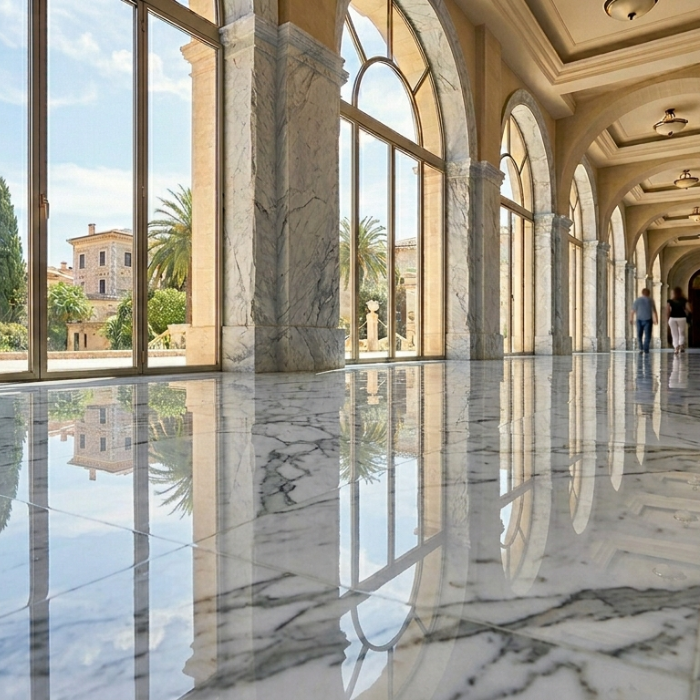
Polishing relies on a sequence of diamond abrasives fitted to the machine. Each grit removes the micro-scratches left by the previous one and tightens the surface of the stone. The higher up the sequence we go, the more evenly light is reflected and the glossier the surface becomes.
The starting point depends on the condition of the marble. A surface that has simply dulled with foot traffic can be taken up from a medium grit; a scratched floor or one with uneven tiles first needs heavier grinding. The finishing point depends on the finish you have chosen: we stop earlier for matt or satin, and go on to very fine grits and then buffing for a gloss or mirror finish.
This is why good polishing is above all about consistency: every pass must cover the whole surface evenly, with no area missed, so that the final reflection is uniform from wall to wall.
There is no single “best” finish. The right finish is the one that matches the stone, the light in the room and the way the space is used.
A soft, reflection-free look with a very contemporary feel. It showcases the texture and colour of the stone, offers good grip underfoot and elegantly hides small signs of wear. It is popular in bathrooms, around indoor pools and in pared-back interiors.
A light sheen that catches the light without glare. It is often the best balance for a living room, corridor or apartment floor: the stone looks alive, the veining stands out and day-to-day care stays simple. Many Geneva owners choose this level for living spaces.
A crisp reflection that gives the marble depth and intensifies its colours. It suits prestigious entrances, reception areas, worktops and formal rooms. It lasts very well with appropriate care and a protective sealer applied after polishing.
The most refined level: the surface reflects lighting and architecture like glass. It is reserved for showpiece entrance halls, hotel lobbies, boutiques and decorative surfaces. It calls for regular upkeep, which we can schedule with you.
Every project follows a clear method, described in more detail on our method page.
We assess the stone, its type, its condition and the light in the space. We suggest one or more possible finishes and provide a free quote in Swiss francs.
Furniture is moved; skirting, woodwork, doors and thresholds are protected. In a residential building, we organise residents’ access with the property manager or the concierge.
Diamond grits follow one another, from the coarsest needed to the finest. Water cools the stone and captures the residue, which we vacuum up as we go.
For gloss and mirror finishes, a final buff closes the surface. We check the reflection under several angles of light before signing off.
A protective impregnator can be applied, and we hand over simple care guidance to make the result last.
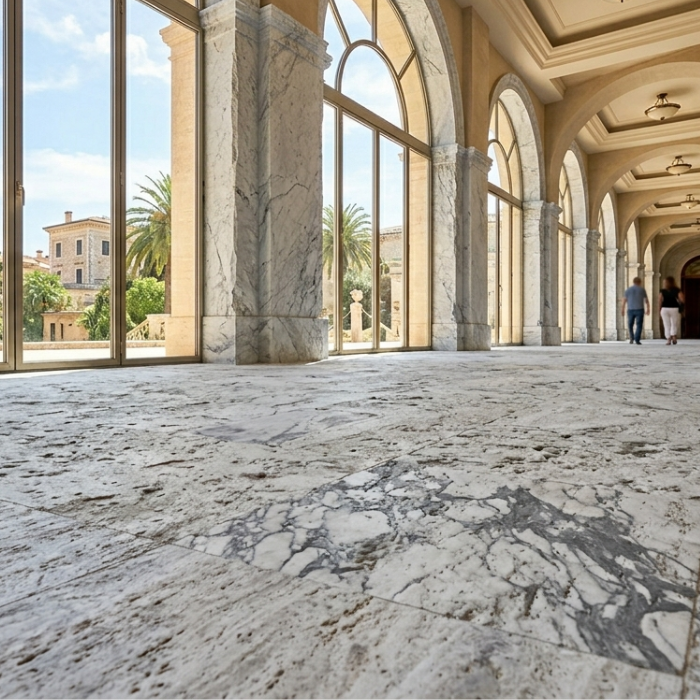
We work marble wet. Water lubricates the pads, limits heat build-up in the stone and turns the particles into a fine slurry that we collect with a wet vacuum. The result: the air stays clean, and so do the furniture and neighbouring rooms.
This is a decisive advantage in an occupied apartment, in the entrance hall of a PPE building where residents keep coming and going, or in a boutique that has to reopen the next morning. Work areas are clearly marked off and the site is cleaned every evening.
The machines are matched to the surface: a weighted rotary machine for large areas, hand-held polishers for corners, risers, marble skirting or vanity tops.
Not all marbles behave the same way. A white Carrara, a grey-veined Bardiglio, a Swedish green or a heavily fossiliferous stone do not all accept the same level of gloss, and their veins do not always polish at the same rate as the background. Knowing the stone means adapting the grit sequence to each material.
Light matters as much as the stone. In an Old Town entrance hall lit by tall windows, a gloss finish brings out the depth of the floor; in a corridor lit by raking light, satin is often more flattering. When it helps, we look at the space at different times of day.
Finally, use determines durability. An entrance floor that receives grit and de-icing salt carried in from the street in winter benefits from a satin or gloss finish maintained regularly, with suitable mats at the door. A fireplace shelf or coffee table, on the other hand, can take a mirror polish that will stay flawless for years. For surfaces exposed to everyday acids, such as worktops, crystallization or a suitable sealer usefully completes the polish.
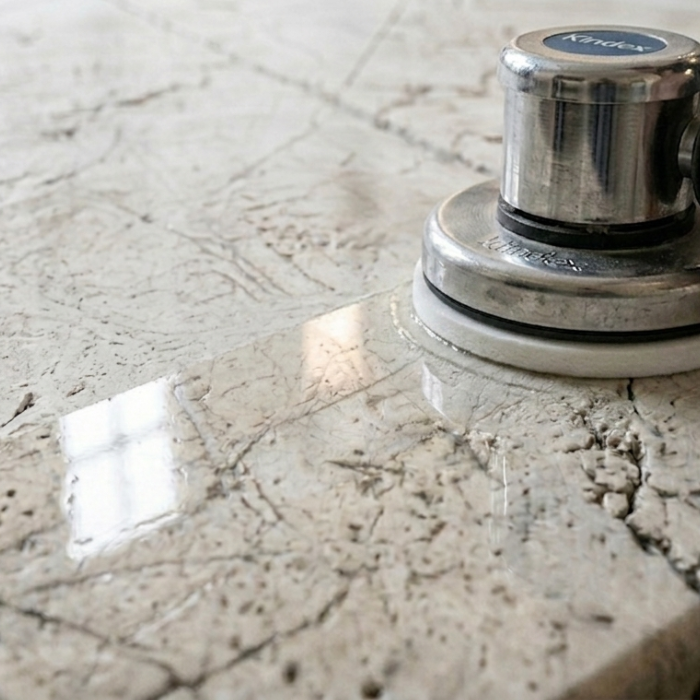
Polishing applies to every marble surface: a marble floor in an apartment or villa, a marble staircase with its stair nosings, the entrance lobby of a PPE building, a marble bathroom, a worktop or a marble fireplace.
On vertical surfaces and small pieces, we work by hand with diamond pads in the same sequence, so that the finish matches the adjoining floor exactly. A staircase can thus regain the same lustre as the landing it leads to.
LevellingWhen tiles are uneven or scratches run deep, grinding flattens the surface before polishing.
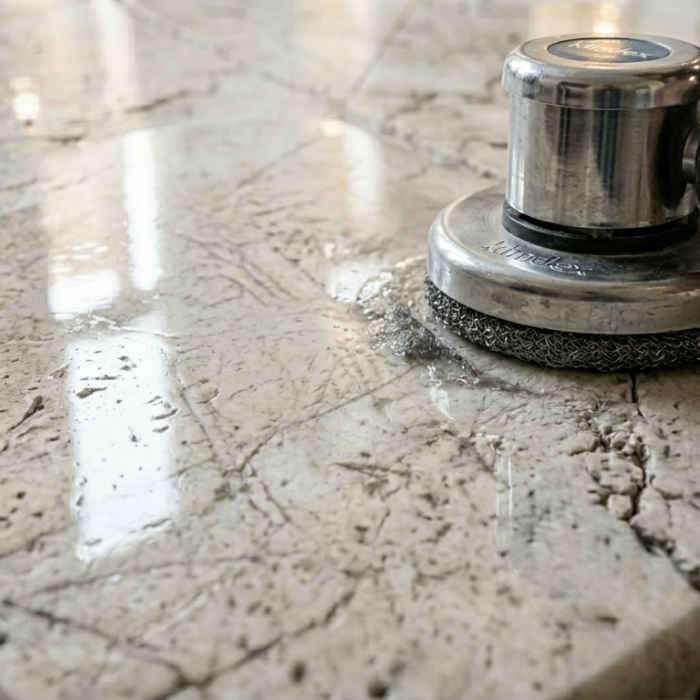 Enhanced shine
A treatment that hardens and brightens the surface of calcareous marbles, ideal for busy floors.
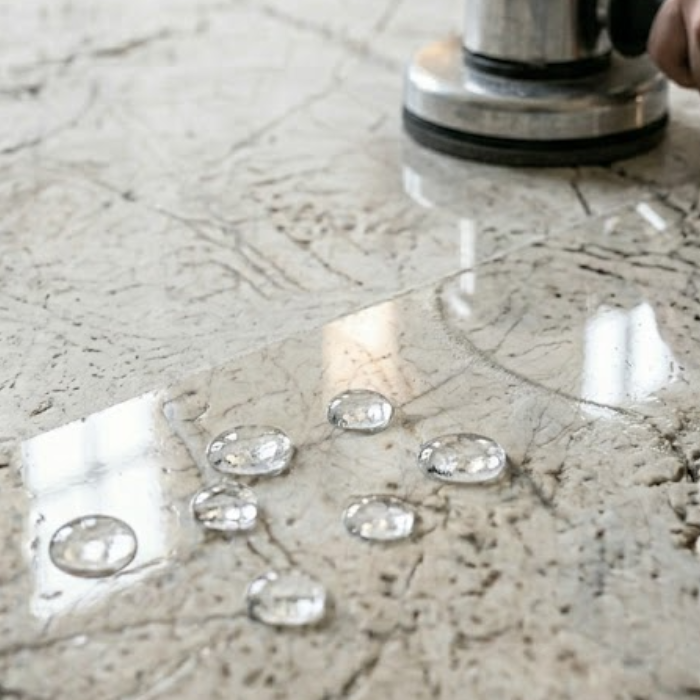 After polishing
A water- and oil-repellent impregnator that protects the finish against everyday stains.
For a living room or apartment corridor, a satin finish offers a fine balance between lustre and ease of care. A showpiece entrance hall or reception area is often best served by a gloss or mirror finish. A bathroom gains in comfort with a matt finish that stays pleasant underfoot. We advise you during the visit, taking the stone and the light into account.
We polish wet: particles are captured in a fine slurry that we vacuum up as we go. The air stays clean and furniture in neighbouring rooms is left untouched. Surroundings are protected and the work area is cleaned every evening, which means we can work in an occupied home or an entrance hall that remains in use.
It depends on the area, the starting condition and the finish you want. A shelf or vanity top is often done within a day; an apartment floor or entrance hall takes several days, especially if grinding is needed first. The exact schedule is set out in the free quote we provide after the visit.
Most marbles accept a very high level of gloss, but each stone has its own character: some veins or inclusions polish differently from the background. Where useful, we test the sequence on a discreet area and tell you the result you can expect, so that the finish matches your expectations before the project begins.
Polishing refines the stone mechanically with ever-finer diamond grits. Crystallization is a chemical surface treatment that hardens and brightens calcareous marbles. The two are often combined: we polish to obtain an even surface, then crystallize to boost the shine on a heavily used floor.
Sweeping or a soft-brush vacuum to remove grit, followed by washing with lukewarm water and a pH-neutral soap, is all you need day to day. Mats at the entrance hold back salt and gravel in winter. For scheduled upkeep, our marble maintenance service can take over.
From the Old Town to Versoix, from Carouge to Collonge-Bellerive, as well as Coppet and Nyon on the Vaud lakeshore.
Tell us about your marble and the finish you have in mind: we will get back to you promptly with a clear proposal in Swiss francs. You can also use our contact page.