
 Clean up
Marble stain removal
Drawing out existing stains before the stone’s pores are closed.
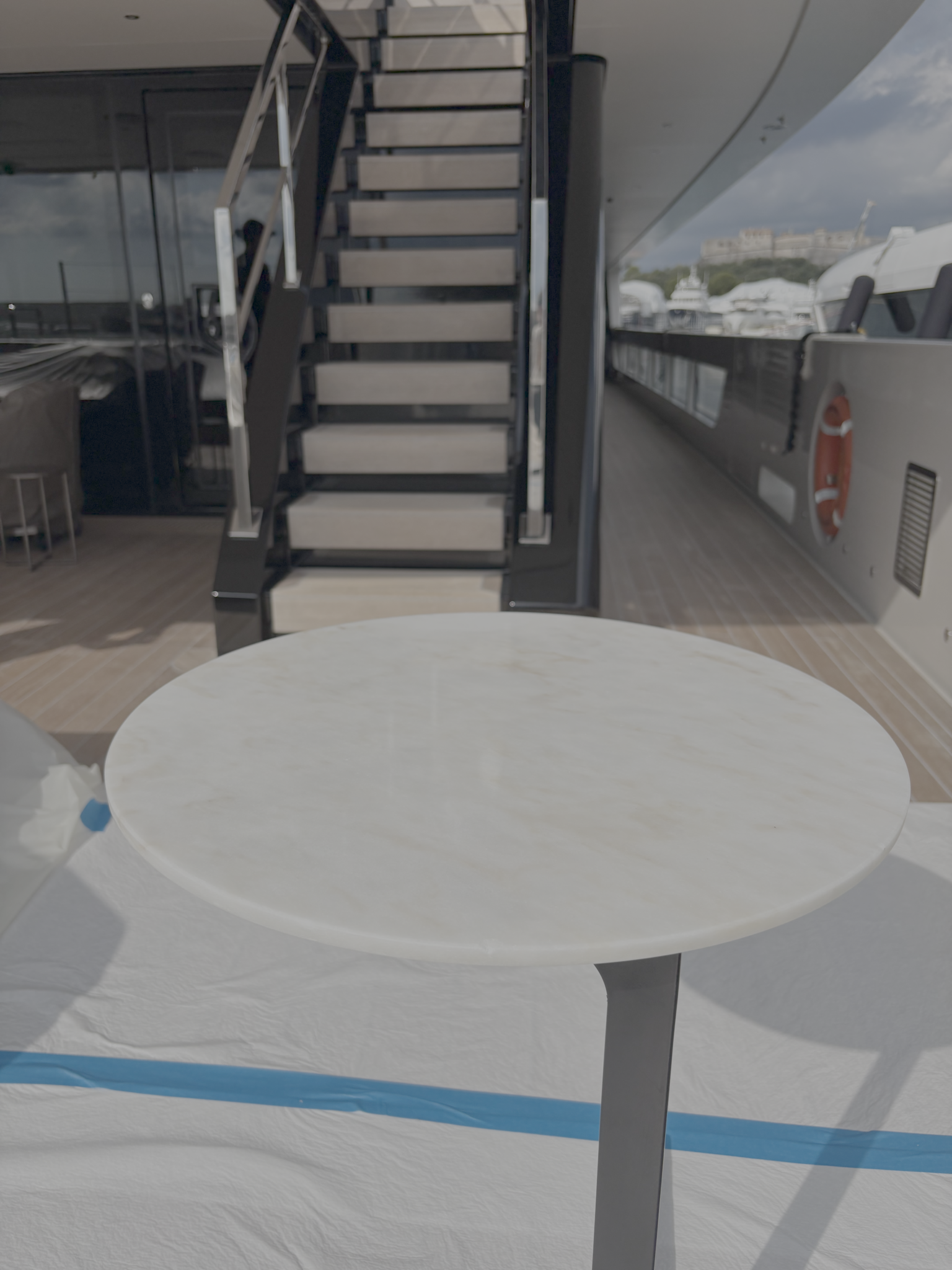
Water-repellent, oil-repellent and stain-resistant impregnators: invisible protection that lets the stone breathe and gives you time to wipe up.
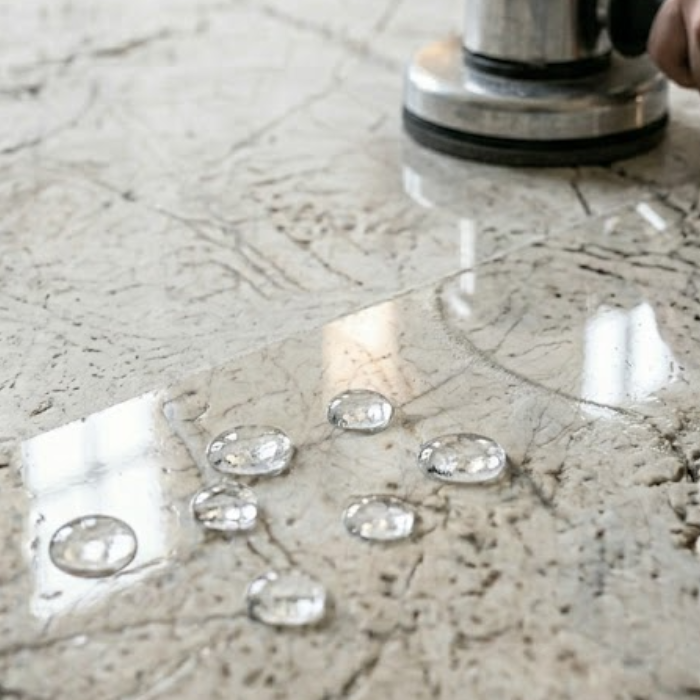
Freshly polished marble is strikingly beautiful, but it remains a porous, calcareous stone. Without protection, spilt coffee or a drop of oil soaks in within minutes. The marble sealing we offer in Geneva consists of impregnating the stone with a product that closes its pores from within, without leaving a film on the surface.
The result is invisible to the eye: the colour, the veining and the finish, gloss or honed, stay exactly as you chose them. What changes is how the marble behaves with liquids. Water beads, oil sits on the surface for longer, and you gain precious time to wipe up before a stain sets in.
Les Traitements du Sud · Geneva applies these treatments to floors, worktops, bathrooms, staircases and building lobbies, in Geneva and along the Vaud shore.
Protective products for natural stone differ in what they repel. The right choice depends on the room and on what the marble meets there every day.
It limits the absorption of water and water-based liquids. It is the baseline protection for a bathroom, a shower tray or an entrance floor exposed to melting snow in winter. It also reduces the penetration of limescale and of salts brought in on shoes.
It also repels fats: cooking oil, butter, cosmetic creams, make-up. Essential on a worktop or a dining table, it is equally valuable on a dressing table or a basin. An oil-repellent product is generally water-repellent too.
This is the trade name for a reinforced water- and oil-repellent impregnator, formulated for highly exposed areas. It gives the longest window against wine, coffee or sauces, and suits busy family kitchens as well as hotel bars.
There are two broad families of protection: varnishes and waxes that form a layer on the surface, and impregnators that penetrate the stone. On marble, we favour impregnators. They settle into the capillaries of the material and coat their walls without blocking them entirely: water vapour keeps moving.
This breathability is essential. A floor laid on a screed or a humid bathroom must be able to release moisture; a sealed surface layer would eventually trap it, causing whitening or delamination. An impregnator, by contrast, does not wear away underfoot like a varnish, does not yellow and does not alter the feel of the stone.
For those who would like to deepen the colours slightly, particularly on a dark marble or a green, there are colour-enhancing impregnators with a “wet look” effect. We always test them on a sample area so that you can approve the result before general application.
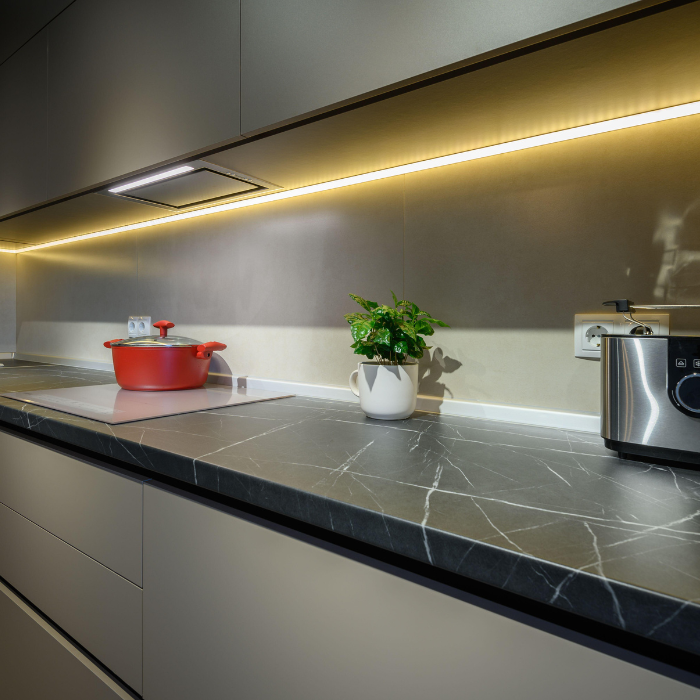
The kitchen brings together all of marble’s enemies: grease, pigments and acids. On a marble worktop, we apply a stain-resistant impregnator that is food-safe once dry, in two cross-coats to saturate the stone. Bear in mind that an impregnator delays absorption but does not protect against the acid etching of a lemon: the stone remains chemically sensitive, hence the importance of wiping up quickly.
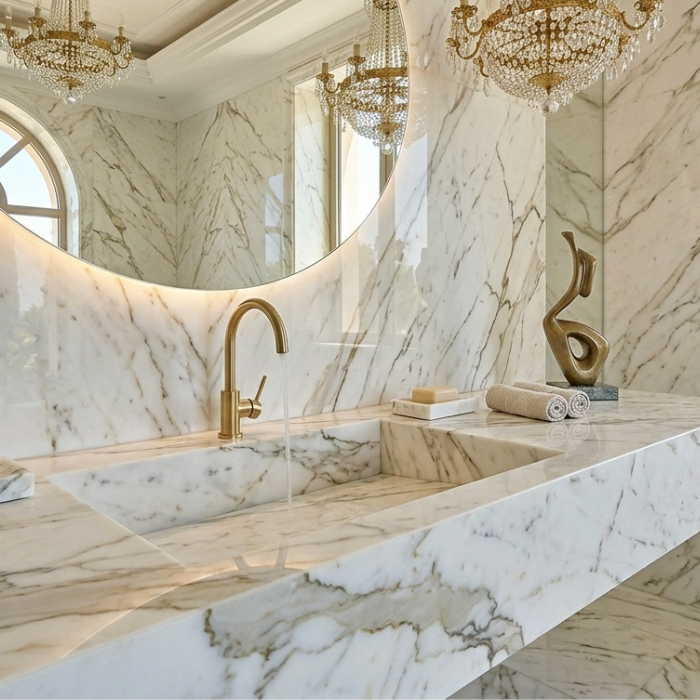
In a marble bathroom, water runs every day and Geneva’s fairly hard water leaves its deposits. A water- and oil-repellent impregnator limits seepage into the stone and the joints, makes rinsing easier and reduces how firmly limescale clings, while also repelling bath oils and cosmetics.
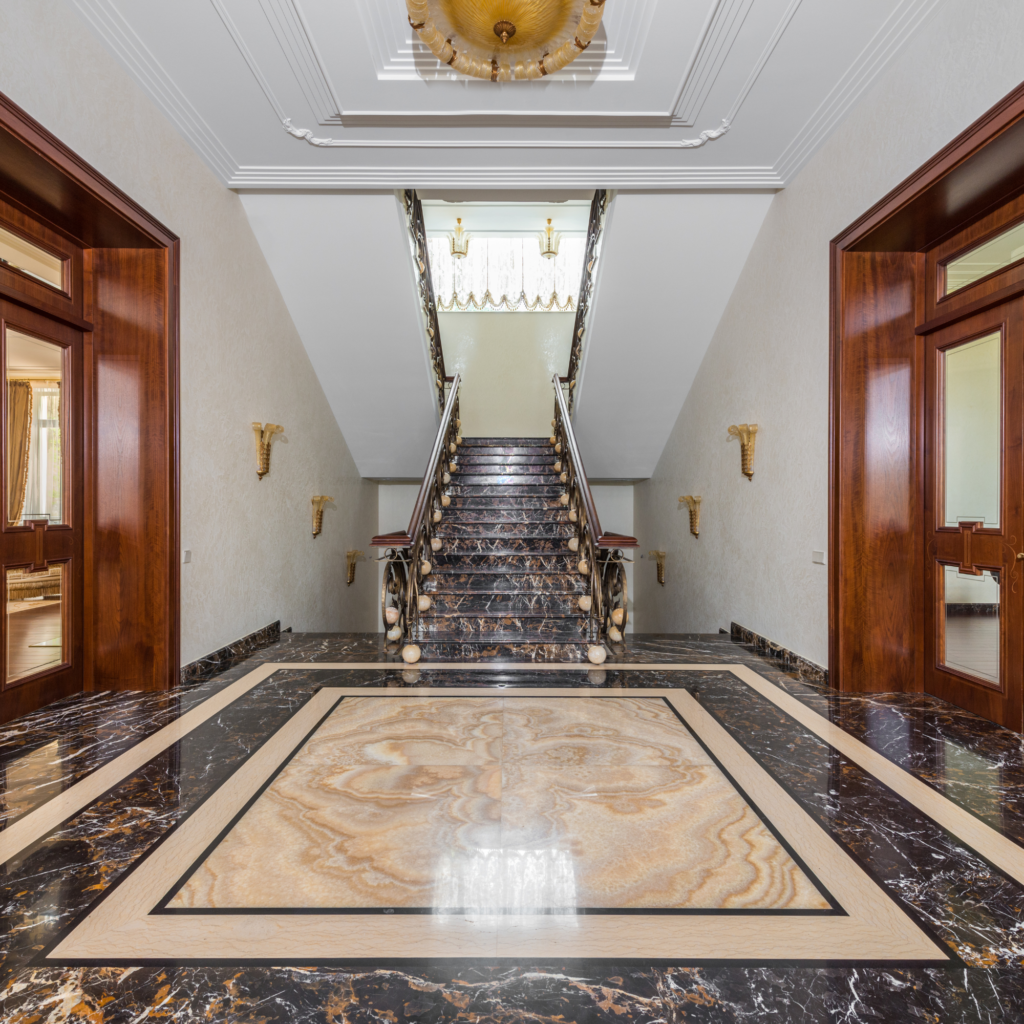
In a building lobby or on a marble staircase, the priority is to withstand snowmelt, de-icing salt and dirt carried in from the street. A deep-penetrating water-repellent, applied before winter, limits white salt blooms and makes the caretaker’s daily work easier.
A protective product must never lock in dirt. The stone is first cleaned and degreased and, where needed, stain-treated or re-polished.
Marble must be perfectly dry to absorb the impregnator. After wet work, we allow a suitable drying time, often 24 hours.
We apply the product to a small patch to check the colour and absorption. You approve the result before we continue.
The product is applied by brush, roller or pad until the stone is saturated, then the excess is wiped off before it dries to avoid any marks.
A water and oil drop test confirms effectiveness. We tell you how long to wait before normal use and before the first wash.
An impregnator does not last for ever: foot traffic, washing and UV gradually wear it down. How often it needs renewing depends on use. A kitchen worktop used daily should be checked every year; a bathroom or living-room floor every two to three years; a busy building lobby ideally before each winter.
The test is simple and you can do it yourself: place a few drops of water on the stone. If they bead, the protection is working. If the marble darkens within a few minutes, it is time to renew it. Renewal is quick: cleaning, drying and a fresh impregnation, with no re-polishing needed if the surface is in good condition.
For property managers, PPE co-ownerships, hotels and boutiques, we build this renewal into a marble maintenance contract, so nothing is overlooked.
Every protection job is designed either as the final stage of a restoration or as a preventive step on marble that is still in good condition. Either way, here is what you can expect.
Clean upDrawing out existing stains before the stone’s pores are closed.
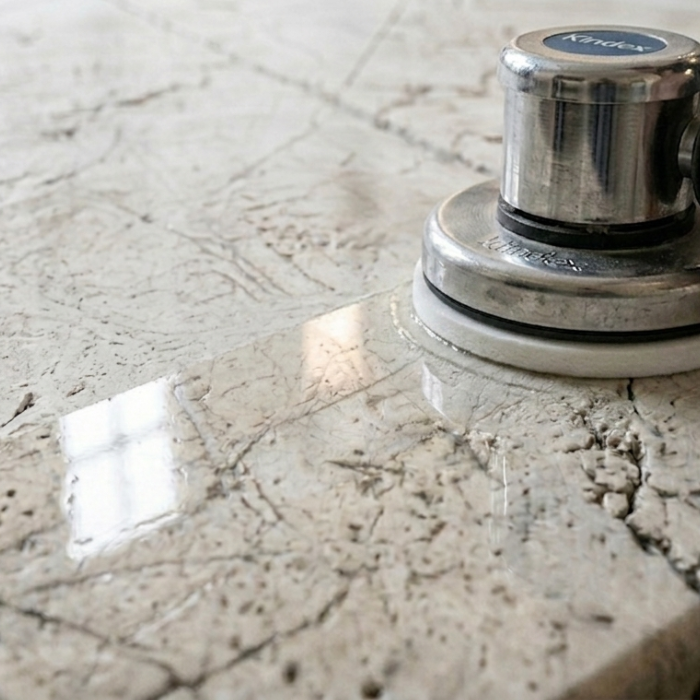 Enhance
Bringing back a gloss or silky honed finish, then protecting it for the long term.
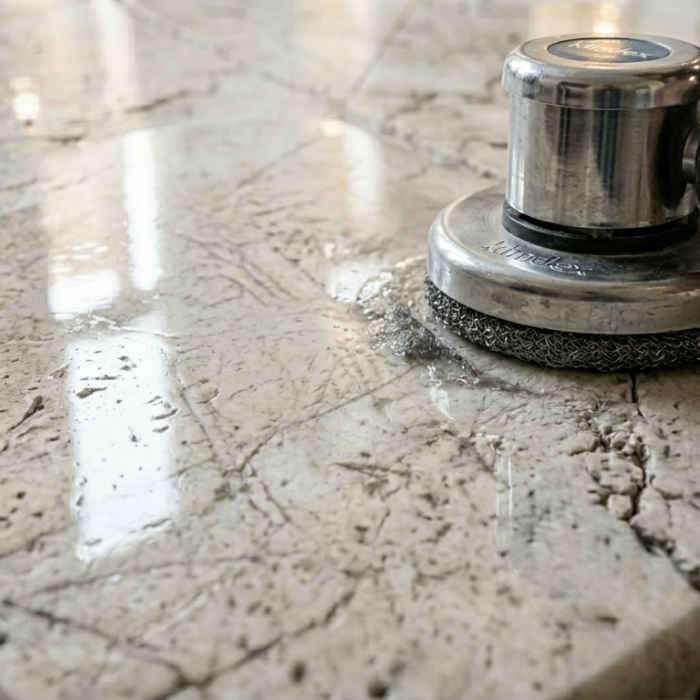 Harden
A reinforced shine for busy floors, complementing impregnation.
A standard impregnator is invisible: it penetrates the stone without forming a layer, and both colour and finish stay the same. Only so-called colour-enhancing, “wet look” impregnators deliberately deepen the tones. In every case, we prepare a sample area for you to approve before applying it to the whole surface.
It slows the penetration of liquids but does not change the calcareous nature of marble, which remains sensitive to acids. Lemon left on the stone will eventually mark it. Sealing does, however, give you time to wipe up, and it is very effective against greasy and coloured stains.
Yes, if the surface is sound. We clean it thoroughly, let it dry and then impregnate it. If, however, the marble shows stains, scratches or a loss of shine, it is better to treat or re-polish it first: sealing would lock in its current condition for several years.
Most impregnators are touch-dry within a few hours and allow light use the same day. Full effectiveness is reached after 24 to 72 hours depending on the product and temperature. We confirm these times at the end of the job, particularly for the first wash.
Yes. For worktops and dining tables we use impregnators that are food-safe once dry. Products are water-based or low in solvents, and the room is ventilated during application.
In a busy lobby, renewing the protection every year before winter is ideal, as de-icing salt and snowmelt put the stone under heavy strain. We can include it in a maintenance contract with the property manager or the PPE, with a free quote in Swiss francs.
From the Old Town to Cologny, from Carouge to Coppet: see all our service areas.
Tell us about your room and how it is used via our contact page: we will recommend the right sealer with a free quote in Swiss francs.