
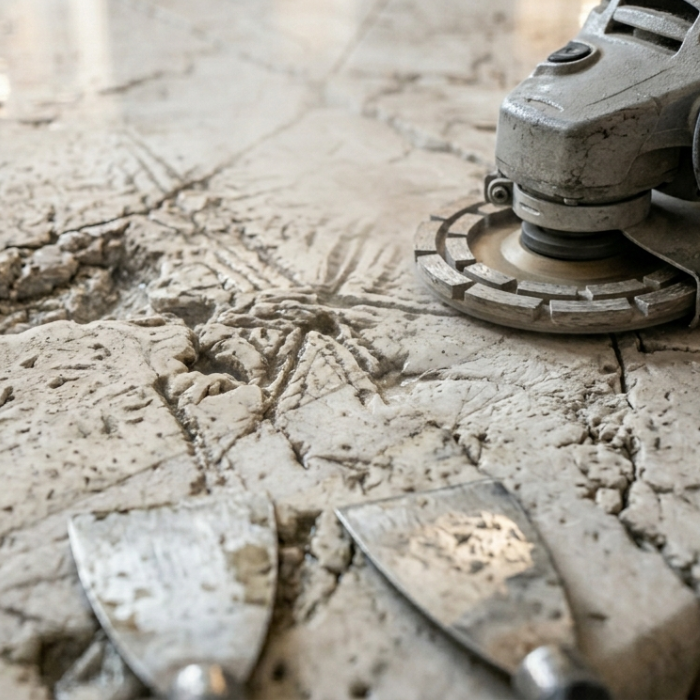
 Whole surface
Marble grinding
To blend several repairs into a fully levelled floor.
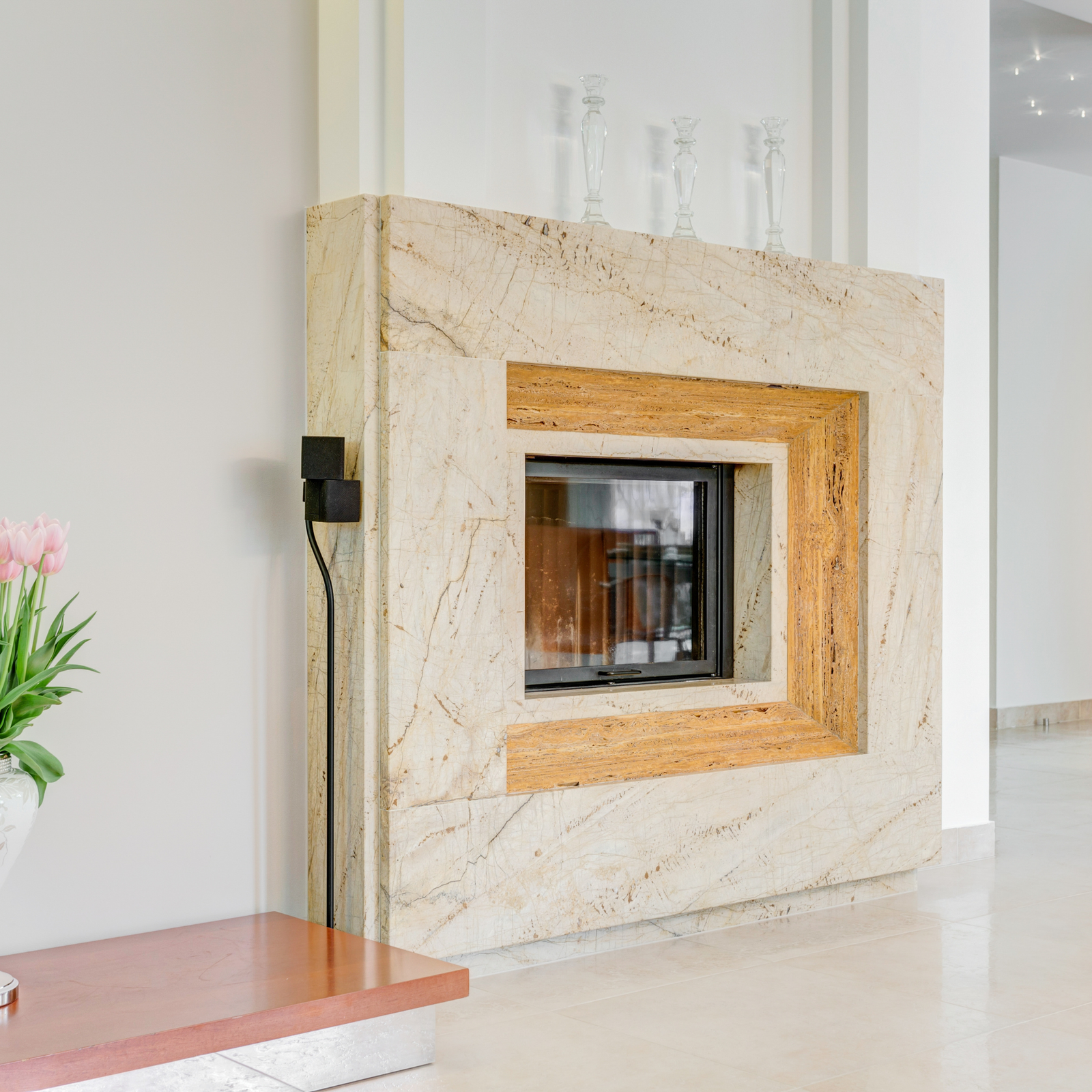
Chips, cracks, stair nosings, loose pieces: we repair your marble with tinted resin and re-polish it so the repair blends into the stone.
Marble repair in Geneva lets you keep original stone rather than replace it. A chip on a stair nosing, a crack in a tile, a broken corner on a worktop or a fireplace shelf that has come loose: these localised defects are treated with precision, so that the repair blends into the pattern of the marble.
The principle is simple to describe and demanding to carry out: clean the damage, fill it or bond it with a suitable resin tinted to the colour of the stone, then level and re-polish the area until it matches the surrounding surface. The result is judged in the light, from several angles.
Les Traitements du Sud · Geneva repairs marble in apartments, villas, PPE entrance halls, hotels and shops across the canton of Geneva and the Vaud lakeshore. For property managers, a targeted repair is often the quickest way to put a staircase or building entrance back in order.
A dropped object or a knock from furniture: the marble loses a small piece on an edge or in the middle of the surface. The chip is cleaned, filled with tinted resin and re-polished flush.
A fine crack can appear after movement in the substrate or an impact. We open it slightly if needed, inject it with resin to stabilise and close it, then re-polish.
The front edge of each step is the most exposed part of a staircase. We rebuild the original profile with filled resin, shape it and polish it like the rest of the tread.
A worktop corner, part of a shelf, a skirting or fireplace surround: when the fragment has been kept, we bond it back with a structural stone adhesive, then finish the joint.
Old drill holes, fixing holes, emptied joints or loosened fossils are filled to match for a continuous surface.
A split but stable tile can be bonded and re-pointed in place, preserving the unity of the floor and its veining.
The quality of a repair comes down to colour. We use stone resins (polyester or epoxy depending on the case) that we tint on site with pigments, a little at a time, until they match the background colour of the stone. On veined marble, a vein can be recreated by working two successive tints.
The resin is applied slightly proud, then, once hardened, levelled flush with the stone. Fine diamond grits then work the area up to the original finish. A well-executed repair is barely noticeable, even up close.
For white or very light marbles, we choose light-stable resins so that the colour stays harmonious over time.
We examine each defect, note the colour and veining of the stone, and provide a free quote in Swiss francs.
The area is dusted and degreased; crumbly edges are trimmed so the resin bonds to sound stone.
The fragment is bonded back, or tinted resin is applied in layers, with the profile rebuilt for stair nosings and edges.
Once hardened, the excess is taken down exactly flush with the surrounding surface.
Successive diamond grits give the area the same finish as the rest: matt, satin, gloss or mirror.
A successful repair is about more than filling. If the repaired area stays duller or glossier than its surroundings, the eye picks it out at once. That is why we always finish by re-polishing, reproducing the grit sequence used for the original surface.
When several repairs are spread across the same floor or staircase, or when the surface as a whole is tired, it is often more harmonious to follow on with overall grinding and polishing. The repairs then disappear into a fully restored surface. We present both options during the visit, with their respective benefits.
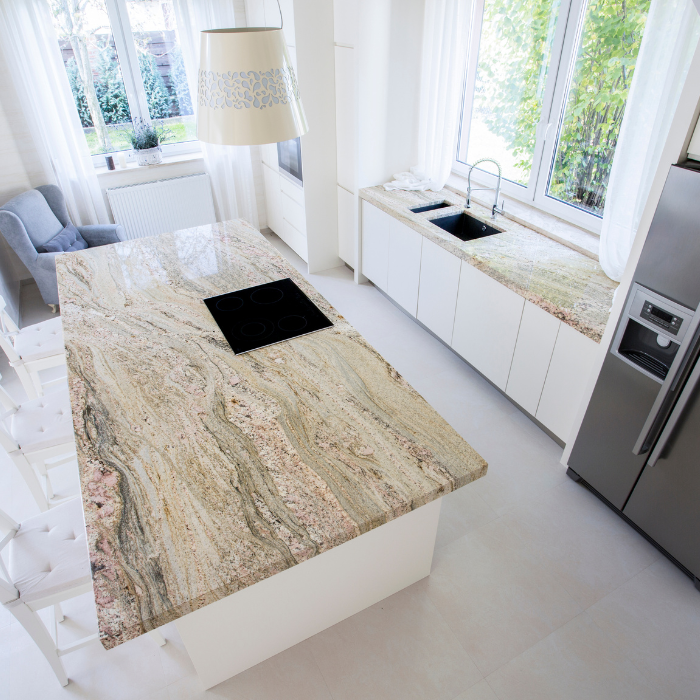
On a worktop or basin, the repair is ideally followed by a water- and oil-repellent sealer, which protects the stone from oil, wine or coffee stains. If old stains remain around the repaired area, our marble stain removal service deals with them first.
The marble staircases of Geneva buildings often account for most repairs: chipped nosings, split risers, cracked landings. Careful restoration gives the stairwell a crisp, safe appearance once more.
In kitchens, marble worktops take knocks from pans and bumped corners; in living rooms, marble fireplaces sometimes have a split shelf or a loose surround. In bathrooms, basins and bath edges are repaired in the same way.
In the older buildings of the Old Town or Carouge, repair makes it possible to preserve period marbles that are hard to source today, while respecting their patina.
Whole surfaceTo blend several repairs into a fully levelled floor.
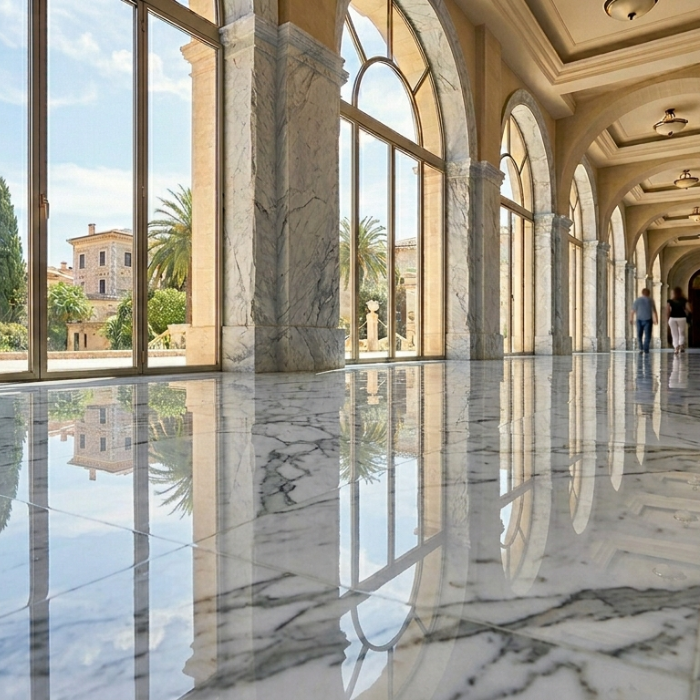 Finish
From matt to mirror, your chosen finish across the whole surface.
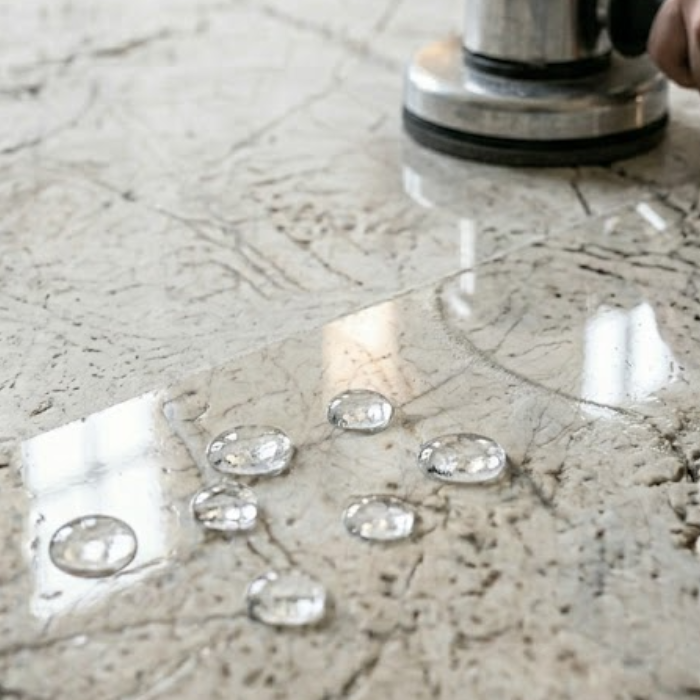 Longevity
An impregnator that protects repaired stone from everyday stains.
A careful repair is barely noticeable. The resin is tinted on site to the colour of the stone, veins can be recreated, and the area is re-polished to the same finish as the rest. The result depends on the type of marble and the size of the defect; we tell you what to expect during the visit.
Yes, it is a common repair in Geneva buildings. We rebuild the edge with filled, tinted resin, shape it to the original profile and polish it. The step regains a continuous line and the staircase looks crisp again, without having to replace the stone.
After cleaning, the crack is injected with a fluid tinted resin that penetrates deeply and stabilises the tile. Once hardened, the resin is levelled and the area re-polished. If the crack comes from movement in the substrate, we let you know so that the repair lasts.
Yes, if you have kept the fragment. We bond it with a structural adhesive designed for stone, fill the joint to match and re-polish. If the piece has been lost, the corner can be rebuilt in tinted resin and shaped to its original form.
Not necessarily: an isolated repair is re-polished locally. When several defects are spread over the surface or the floor is generally dull, overall grinding and polishing give a more consistent result. We set out both options in the free quote so you can choose with full knowledge.
Yes, a stone resin correctly applied to a clean, sound substrate holds up well over time, including on steps used every day. On light marbles, we choose light-stable resins. Cleaning with neutral soap and a suitable sealer extend the result further still.
We work throughout the communes of the canton of Geneva as well as in Coppet and Nyon.
Send us a photo of each defect: we will suggest a suitable solution, priced in Swiss francs. Head to our contact page.