
 Guide
Caring for marble floors
Caring for marble floors: daily habits, pH-neutral products, pitfalls to avoid and precautions against de-icing salt during a Geneva winter.

The main families of marble and simple observations, safe for the stone, to identify the one in your home.
In the flats along Geneva’s 19th-century boulevards, the villas on the Cologny hillside or the residential lobbies of the right bank, marble comes in dozens of varieties: luminous whites, warm creams, deep blacks, veined greens and greys. Knowing which one graces your floor, fireplace or bathroom is about more than curiosity.
Each marble has its own porosity, hardness and sensitivity. A very fine white shows coloured stains more quickly, a black reveals limescale marks and scratches more readily, a heavily veined marble may have softer veins. Knowing your stone helps you choose the right products and finish, and makes conversations with a marble specialist easier.
This guide introduces the most common families of marble and a few simple observations, entirely safe for the stone, to help you find your bearings.
These are the varieties frequently found in classic and contemporary interiors.
Quarried in the Apuan Alps in Tuscany. A white to very light grey background with fine, diffuse grey veining. Very widely used for floors, bathrooms and worktops.
Another marble from the Carrara area, but rarer. A very bright white background with broader, more contrasting veins in grey to gold. Highly sought after for statement pieces.
Pure, very fine white with bold, widely spaced grey veins. Historically used for sculpture, today it graces high-end fireplaces and bathrooms.
A Spanish marble from the Basque Country, deep black crossed by fine white veins. Superb in a chequerboard with white marble, it readily shows limescale marks and fine scratches.
A Spanish marble from the Alicante area, creamy beige with an even appearance, sometimes crossed by lighter or golden veins. Very common on apartment and lobby floors.
A brown Spanish marble, from chocolate to coffee, crossed by a dense network of light veins. Warm and often chosen for fireplaces, counters and bathrooms.
The chart below illustrates the variety of colours and veining. It will help you match your stone to a known family before discussing it with a marble specialist.





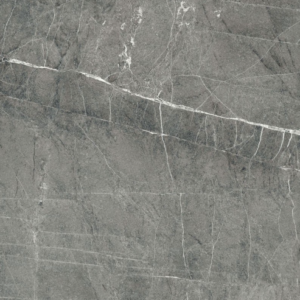
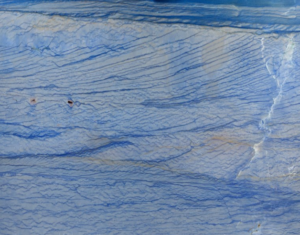
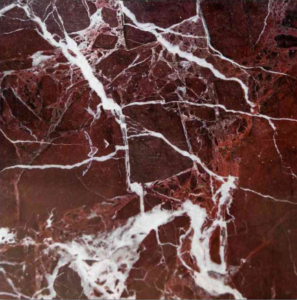
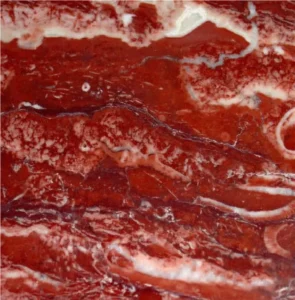
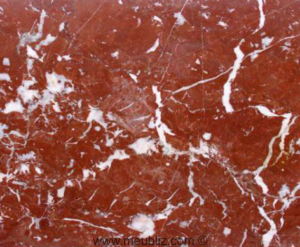
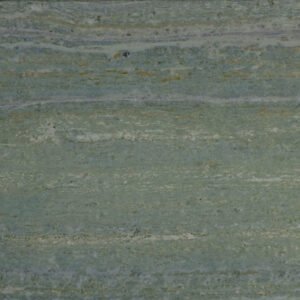
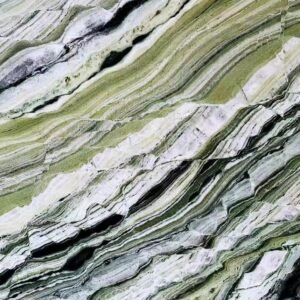
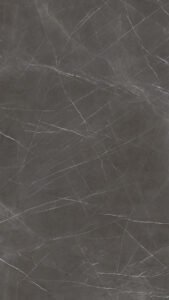
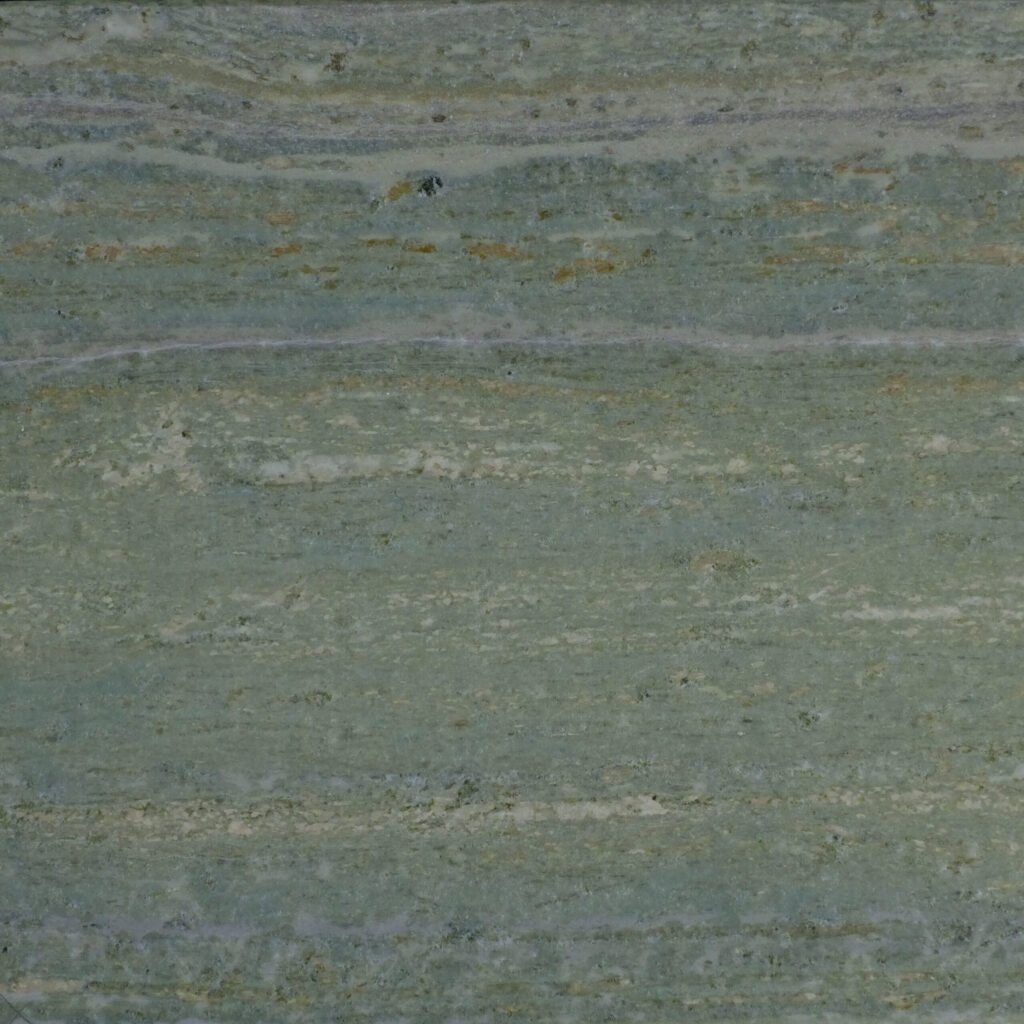
There is no need to scratch the surface or pour vinegar on it to “test” your stone: those methods damage marble. A few observations are enough to point you in the right direction.
Start by looking at the background colour and the pattern of the veins in natural light: fine and diffuse, broad and contrasting, or a dense network? Then look at several tiles: natural marble varies from one tile to the next, whereas a printed imitation often repeats the same pattern.
Touch the surface: marble feels cool, more so than most resins or ceramics. Finally, look at a visible edge (threshold, stair nosing): in natural stone the vein runs through the thickness, whereas marble-effect ceramic shows a uniform body.
A very fine white marble such as Carrara or Statuario absorbs coloured stains (coffee, wine, oil) more easily: oil-repellent protection is particularly recommended on worktops and in bathrooms. A black marble such as Nero Marquina highlights the slightest limescale haze or scratch: careful drying and well-executed polishing make all the difference.
Heavily veined marbles such as Emperador sometimes have softer veins or natural micro-fissures filled at the factory: they need particular care during grinding and occasionally filling with tinted resin. Creams such as Crema Marfil stand up well to footfall but can yellow under unsuitable waxes.
To find out more, our marble polishing page explains how each stone is worked, while the marble fireplace restoration and marble bathroom restoration pages cover these surfaces in detail.
Look at several tiles: no two natural marble tiles are identical, whereas ceramic often repeats the same patterns. Check a visible edge: in stone, the vein runs through the thickness. Finally, marble feels cooler to the touch. If in doubt, a marble specialist can tell within minutes.
No. A drop of vinegar does make marble react, but it leaves a dull mark that then has to be repolished. The visual and tactile observations described in this guide are more than enough to identify your stone, with no risk to it at all.
No. The name is often used generically, but there are many white marbles: Calacatta, Statuario, Thassos, Sivec and many others, each with a characteristic background and veining. An experienced marble specialist can usually tell them apart by eye, which guides the choice of products and finish.
The variety tells you about the stone’s porosity, hardness and sensitivity to stains, and therefore about the right method and protection. If you do not know it, photos are enough: our craftsmen identify it and take it into account in a free quote in Swiss francs.
Send us a few photos: our craftsmen will identify it and advise you on the right care or restoration. Request your free quote in Swiss francs.
GuideCaring for marble floors: daily habits, pH-neutral products, pitfalls to avoid and precautions against de-icing salt during a Geneva winter.
 Guide
Removing stains from marble: grease, wine, rust, limescale and acid etching. What you can safely do yourself and when to call in a marble…
 Guide
Marble polishing or crystallization: how each works, results, time on site and the criteria for deciding which technique suits your floor or worktop.