
 Guide
Caring for marble floors
Caring for marble floors: daily habits, pH-neutral products, pitfalls to avoid and precautions against de-icing salt during a Geneva winter.
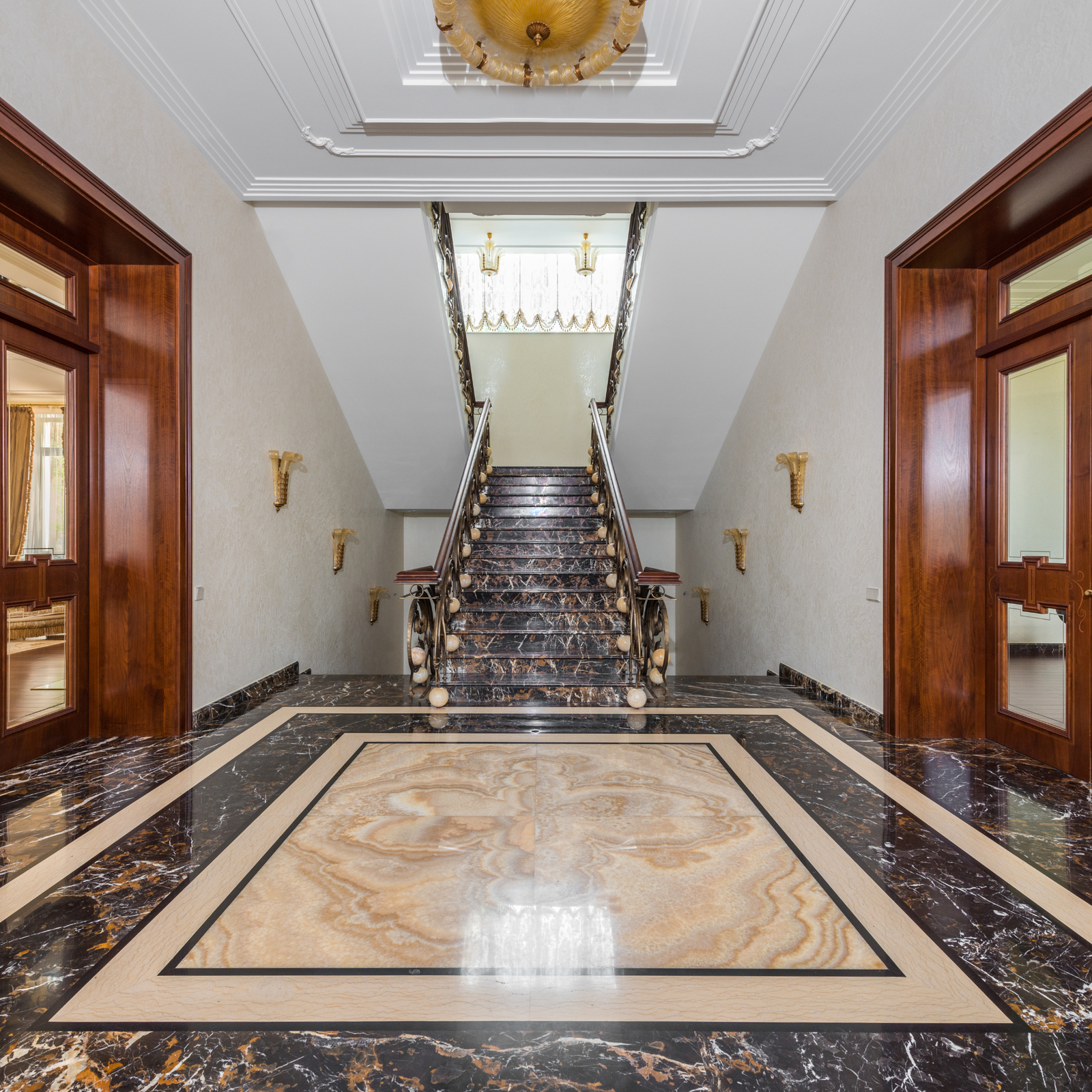
Co-owners’ meeting, administrator, ownership shares: key points for restoring the marble in a shared lobby or staircase.
Entrance halls, staircases, landings, lift thresholds: in many Geneva buildings, from the 19th-century boulevards to the residences of Champel and Eaux-Vives, marble is part of the building’s identity. When the building is held as a Swiss co-ownership (PPE, propriété par étages), this marble generally belongs to the common areas, and its restoration is decided and funded collectively.
This guide explains, in general terms, who decides, who pays and how to prepare a quote so that the co-owners’ meeting has clear information to work with. Co-ownership is governed by the Swiss Civil Code (Articles 712a ff.), supplemented by each building’s own management and use regulations.
This information is general and does not constitute legal advice: for any specific question, the co-ownership administrator, the property management agency or a notary remain the appropriate contacts.
In a PPE, each owner holds a share of the building together with an exclusive right to their own unit. The common areas — usually including the hall, stairwell and landings — are managed jointly.
This is the body that decides on matters of joint management, including work on the common areas. It meets at least once a year, and more often if needed.
Often a property management agency (régie), sometimes one of the owners. The administrator carries out the meeting’s decisions, oversees routine upkeep, prepares the agenda and gathers quotes to present.
These set out the rules specific to the building: what counts as common areas, cost-sharing keys, any renovation fund, voting arrangements. This is the first document to consult.
The Civil Code distinguishes several categories of work, to which different majorities apply, subject to the building’s regulations. Maintenance and repair work needed to preserve the value and usefulness of the building generally requires a simpler majority than useful work aimed at improvement or work that is purely for embellishment. Maintenance polishing of a lobby is therefore not necessarily treated in the same way as replacing a floor covering or changing its appearance. The administrator states the applicable majority when the item is placed on the agenda.
Under the Civil Code, co-owners contribute to common charges and joint management costs in proportion to the value of their share, unless the regulations provide otherwise. Restoring the marble in a shared lobby or staircase is, in principle, one of these common costs.
Many co-ownerships have a renovation fund, topped up regularly, which makes it possible to finance this type of work without an exceptional call for funds. The co-owners’ meeting decides how it is used.
Marble inside an individual unit (a flat’s floor, bathroom or fireplace), on the other hand, is generally the responsibility of the owner concerned. The regulations and the deed establishing the co-ownership define the boundary precisely.
A decision is easier to reach when everyone understands what is being proposed, why, and with what result. Here is the approach we recommend to administrators and to owners driving the project.
Photos of the lobby, staircase and landings, shots against the light to show scratches and dull areas, close-ups of chips and joints.
Method, areas, number of steps, finish, repairs, final protection, working hours. A clear quote makes comparison and discussion easier.
Keeping access open, working on half the lobby or one flight of stairs at a time, off-peak hours, informing occupants and tenants.
The administrator attaches the quote or quotes to the notice of meeting so everyone can review them beforehand.
After the vote, the administrator places the order, sets the dates and informs the building. A maintenance plan can be approved at the same time.
A periodic maintenance schedule included in the annual budget prolongs the result and spreads the cost over time.
A few points come up time and again in co-owners’ meetings. Anticipating them makes presenting the project much smoother.
Our page for property managers explains how we work with administrators. For the surfaces involved, see also marble lobby restoration and marble staircase restoration, as well as our marble maintenance plans.
As a rule, no: since the lobby is generally part of the common areas, the work requires a decision by the co-owners’ meeting, carried out by the administrator. An owner can, however, ask for the item to be added to the agenda and suggest a quote. Urgent measures are subject to specific rules.
Unless the regulations provide otherwise, common costs are shared among the co-owners in proportion to the value of their share. The renovation fund, if there is one, can be used on the decision of the co-owners’ meeting. The administrator will confirm the cost-sharing key that applies to your building.
Generally not. Marble inside your unit falls within your exclusive part and is your own decision. The co-ownership regulations and founding deed define precisely what is common and what is private; if in doubt, the administrator can advise you.
Yes, and it is recommended. The administrator or an owner can send us photos and information; we provide a free, detailed quote in Swiss francs setting out the method, finish and planned organisation, which the administrator can attach to the notice of meeting.
Administrators, property managers and co-owners: we prepare a clear quote, ready to present at your meeting. Request your free quote in Swiss francs.
GuideCaring for marble floors: daily habits, pH-neutral products, pitfalls to avoid and precautions against de-icing salt during a Geneva winter.
 Guide
Removing stains from marble: grease, wine, rust, limescale and acid etching. What you can safely do yourself and when to call in a marble…
 Guide
Marble polishing or crystallization: how each works, results, time on site and the criteria for deciding which technique suits your floor or worktop.