
 Guide
Caring for marble floors
Caring for marble floors: daily habits, pH-neutral products, pitfalls to avoid and precautions against de-icing salt during a Geneva winter.

Area, condition of the stone, finish, access and working hours: the factors behind the price, and how to get a reliable quote.
“How much does marble restoration cost per m²?” It is the first question people ask, and a perfectly reasonable one. Yet two floors of the same size can require very different work: a few hours of crystallization for one, several passes of grinding and polishing, repairs and protection for the other.
The price of marble restoration is therefore built up from several concrete factors: the area, the condition of the stone, the finish you want, the layout of the premises and the working hours. Understanding these factors lets you compare quotes on a sound basis and know exactly what you are paying for.
This guide explains each of these parameters without quoting a generic figure that would not reflect your situation: only a quote drawn up after examining the stone gives the right price. Ours is free and given in Swiss francs.
These are the main parameters every marble specialist takes into account when pricing a job.
The larger the area, the more the equipment set-up and preparation time are spread out, so the cost per m² generally tends to fall. Conversely, a small or awkwardly shaped area (bathroom, alcoves) takes proportionally more time.
This is the decisive factor. Marble that is simply dull can be revived quickly; a scratched, etched floor with uneven tiles, chips or cracks requires grinding, repairs and more passes.
A mirror polish means working through to the finest grits, so more passes than a honed finish. Water- or oil-repellent protection is added depending on use.
An upper floor without a lift, a staircase with many steps, furniture to move, protecting walls and woodwork, removing grinding slurry: the layout of the site affects working time.
In a residential lobby, shop or hotel, work often has to be done early, late or at weekends so as not to disrupt activity. These constraints are built into the quote.
Steps, nosings, skirting, worktops, fireplaces: these are often worked by hand or with smaller tools, and priced per item or per linear metre.
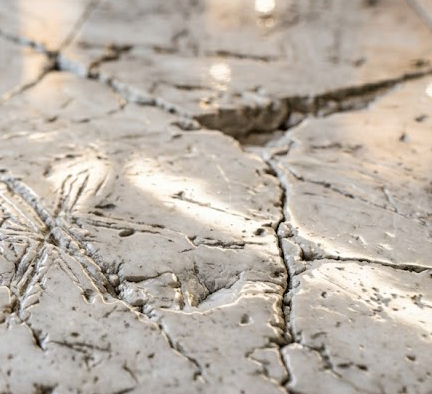
The time spent on marble depends directly on the starting grit. A floor with little damage can be worked from a fine grit; a heavily scratched or uneven floor must start with a coarse grit to level it, then go through every stage up to the finish.
Repairs come on top: filling chips and holes with tinted resin, treating cracks, replacing a tile where necessary, redoing joints. Each item is described in the quote so you know exactly what every line corresponds to.
This is also why regular maintenance pays off: stone kept in good condition is restored more quickly, and the next intervention will be lighter.
A sound quote relies on accurate information. Here is how the process works, from first contact to the priced proposal.
Type of surface (floor, staircase, worktop, fireplace), location (municipality, postcode), approximate area, how the space is used and the finish you want.
An overall view, a shot against the light to reveal scratches and dull areas, and close-ups of defects. They allow a quick initial opinion.
For large areas or delicate cases, the craftsman comes to examine the stone, take measurements and note any access constraints.
Each service is described: preparation, grinding, polishing, repairs, protection, protecting surrounding surfaces, working hours. The quote is free and in Swiss francs.
Dates, hours, managing access for a building or a shop: everything is agreed before work begins.
Two quotes for the same area can look very far apart simply because they do not describe the same work. Before comparing totals, compare content: number of passes and grits, the finish promised, whether repairs are included, final protection, working hours, travel and set-up.
To get a clearer picture of what each line of a quote covers, see our marble grinding, marble polishing and marble repair pages. For the overall approach, our method sets out the stages of a project.
Because a generic rate would be misleading. Depending on the condition of the stone, the same area may need a simple crystallization or full grinding with repairs. We prefer to look at your marble, from photos or on site, and give you a free, detailed quote in Swiss francs that genuinely matches your project.
For a modest area in clearly visible condition, clear photos (overall view, a shot against the light, close-ups) often allow a price to be given. For a lobby, a large floor or a delicate case, a visit makes it possible to measure precisely, check access and refine the method.
Yes, over time. Well-maintained marble stays in a condition that allows light interventions such as buffing or crystallization. Neglected marble accumulates scratches and etching, which then calls for full grinding, a longer job. A suitable maintenance schedule is therefore a sensible investment.
Yes. For residential lobbies, shops, offices or hotels, the work can be organised early in the morning, in the evening or at weekends so as not to disrupt activity. These arrangements are agreed with you and set out in the quote.
Tell us about your project and attach a few photos: we will reply with a clear proposal. Request your free quote in Swiss francs.
GuideCaring for marble floors: daily habits, pH-neutral products, pitfalls to avoid and precautions against de-icing salt during a Geneva winter.
 Guide
Removing stains from marble: grease, wine, rust, limescale and acid etching. What you can safely do yourself and when to call in a marble…
 Guide
Marble polishing or crystallization: how each works, results, time on site and the criteria for deciding which technique suits your floor or worktop.